
Morning Workout Routine for Energy: A Complete Guide to Start Your Day Strong
Morning workout routine for energy is one of the most effective ways to start your day energized, alert, and motivated.
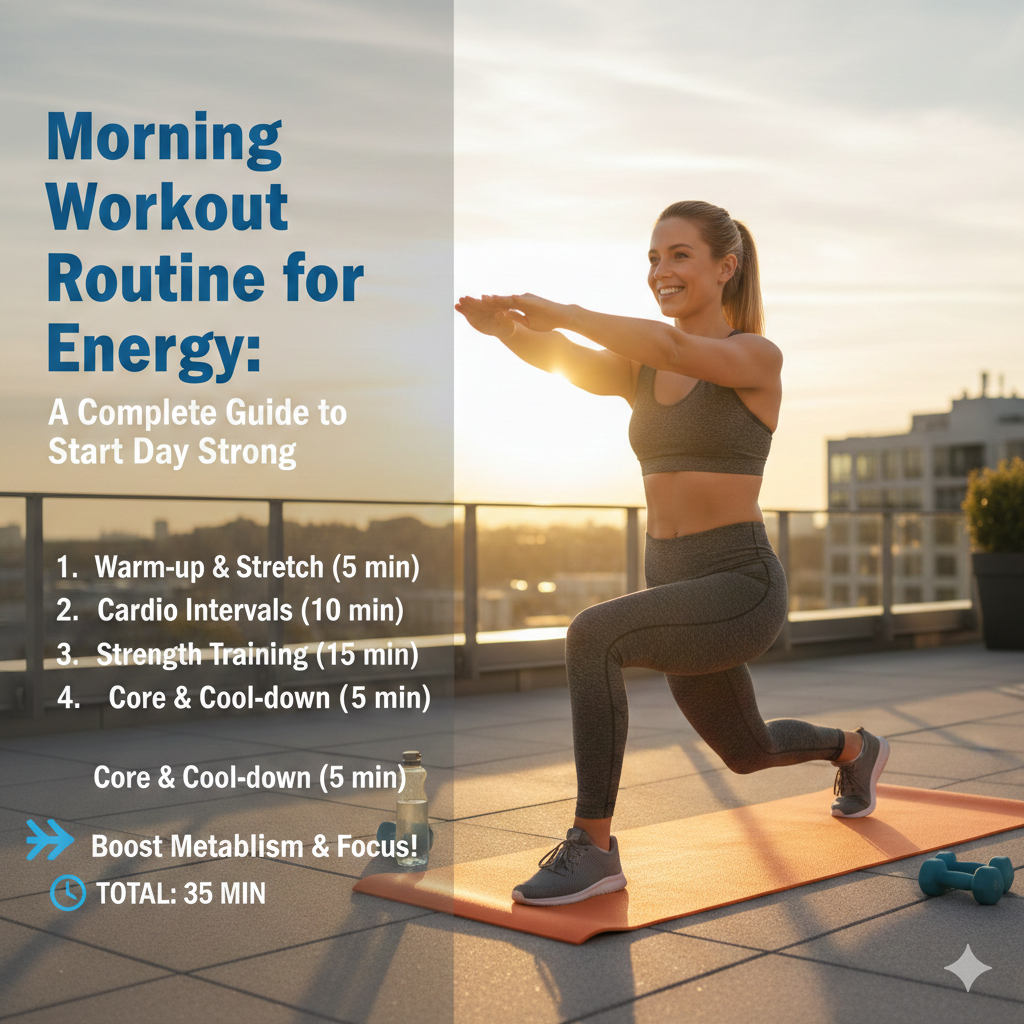
Waking up feeling tired, unmotivated, or mentally foggy is a common struggle for many people. Instead of reaching for another cup of coffee, one of the most powerful and natural ways to boost your energy is through a structured morning workout routine. A well-designed morning exercise plan can improve blood circulation, enhance oxygen flow to the brain, stabilize mood, and set a productive tone for the entire day.
Scientific research from organizations like the American Heart Association and the Mayo Clinic consistently shows that regular physical activity increases energy levels, improves cardiovascular health, reduces stress, and enhances mental clarity. Morning workouts, in particular, help regulate circadian rhythms and improve sleep quality at night.
This detailed guide will walk you through:
- The benefits of morning workouts
- How exercise boosts energy
- A complete step-by-step morning workout routine
- Quick 10-minute and 20-minute alternatives
- Home and gym options
- Nutrition and hydration tips
- Common mistakes to avoid
- Weekly progression plan
- Tips for consistency
Let’s dive in.
Why Morning Workouts Increase Energy
Many people believe exercise makes them tired. While intense overtraining can cause fatigue, moderate, structured exercise actually increases energy levels.
Here’s why:
1. Increased Blood Circulation
Exercise increases heart rate, which improves blood flow. This means more oxygen and nutrients reach your muscles and brain, helping you feel more alert.
2. Endorphin Release
Physical activity triggers the release of endorphins—your body’s natural “feel-good” chemicals. These help reduce stress and improve mood.
3. Cortisol Regulation
Cortisol naturally rises in the morning to help you wake up. Exercising during this time aligns with your body’s natural rhythm and enhances alertness.
4. Improved Mitochondrial Function
Regular exercise improves mitochondrial efficiency. Mitochondria are the “energy factories” of your cells. Better mitochondria mean more sustained energy throughout the day.
5. Better Sleep at Night
Morning exercise helps regulate sleep cycles, leading to deeper, more restorative sleep.
Ideal Duration for a Morning Energy Workout
You don’t need to spend hours exercising. Even 10–30 minutes can make a significant difference.
- 10 minutes – Quick activation
- 20 minutes – Balanced energy boost
- 30 minutes – Full body conditioning
- 45 minutes – Advanced routine
The key is consistency, not duration.
Complete 30-Minute Morning Workout Routine for Energy
This routine requires no equipment and can be done at home.
Phase 1: Warm-Up (5 Minutes)
Warming up increases circulation and prepares muscles for movement.
1. Jumping Jacks – 1 minute
- Stand tall
- Jump while spreading arms and legs
- Maintain steady rhythm
Benefits: Raises heart rate quickly.
2. Arm Circles – 30 seconds forward, 30 seconds backward
- Extend arms sideways
- Make controlled circular motions
Benefits: Activates shoulders and improves mobility.
3. Hip Rotations – 1 minute
- Hands on hips
- Rotate in circular motion
Benefits: Improves lower body flexibility.
4. March in Place – 2 minutes
- Lift knees slightly higher than normal
- Swing arms naturally
Benefits: Gradually increases heart rate.
Phase 2: Cardio Activation (10 Minutes)
Cardio stimulates circulation and boosts oxygen supply.
1. High Knees – 1 minute
Lift knees toward chest at a moderate pace.
2. Bodyweight Squats – 15 reps
- Feet shoulder-width apart
- Lower hips back and down
- Keep chest upright
3. Push-Ups – 10–15 reps
- Keep body straight
- Modify on knees if needed
4. Mountain Climbers – 1 minute
- Plank position
- Alternate knees toward chest
5. Lunges – 10 reps per leg
Step forward and lower back knee.
Repeat this circuit twice.
Phase 3: Core and Strength (10 Minutes)
1. Plank – 30–60 seconds
Strengthens core and improves posture.
2. Glute Bridges – 15 reps
Lie on back and lift hips upward.
3. Superman Hold – 30 seconds
Lie on stomach, lift arms and legs.
4. Bicycle Crunches – 15 reps
Alternate elbow to opposite knee.
Repeat once.
Phase 4: Stretch and Cool Down (5 Minutes)
Stretching reduces muscle tightness and promotes recovery.
- Hamstring stretch – 30 seconds
- Quadriceps stretch – 30 seconds
- Shoulder stretch – 30 seconds
- Deep breathing – 2 minutes
Inhale for 4 seconds, exhale for 6 seconds.
10-Minute Quick Energy Routine (Busy Schedule)
If you’re short on time:
- Jumping jacks – 2 minutes
- Squats – 20 reps
- Push-ups – 15 reps
- Plank – 1 minute
- High knees – 2 minutes
Done.
Gym-Based Morning Routine
If you prefer the gym:
- Treadmill brisk walk – 5 minutes
- Rowing machine – 5 minutes
- Leg press – 3 sets
- Chest press – 3 sets
- Lat pulldown – 3 sets
- Light stretching
Nutrition Tips for Morning Energy
Before Workout
If exercising within 15 minutes of waking:
- Drink water
- Optional: banana or small handful of nuts
If 30–60 minutes after waking:
- Oatmeal
- Greek yogurt
- Whole grain toast with peanut butter
After Workout
Eat within 30–60 minutes:
- Eggs and toast
- Smoothie with protein
- Oats with fruit
Hydration is critical. Drink at least 1–2 glasses of water.
Common Mistakes to Avoid
- Skipping warm-up
- Exercising too intensely immediately
- Not eating enough protein
- Poor sleep
- Inconsistent schedule
Weekly Progression Plan
Week 1–2
- 20 minutes per day
- Focus on correct form
Week 3–4
- Increase repetitions
- Add light weights
Week 5+
- Add interval training
- Increase plank time
Mental Benefits of Morning Exercise
Morning workouts also improve:
- Focus
- Confidence
- Productivity
- Emotional stability
Exercise stimulates neurotransmitters like dopamine and serotonin, which enhance motivation and reduce anxiety.
How to Stay Consistent
- Prepare workout clothes the night before
- Sleep early
- Set alarm across the room
- Track progress
- Start small
Sample 7-Day Energy Workout Plan
Monday: Full body routine
Tuesday: Cardio focus
Wednesday: Core + light cardio
Thursday: Strength
Friday: HIIT (moderate)
Saturday: Yoga/stretch
Sunday: Rest
Final Thoughts
A morning workout routine is one of the most powerful habits you can build. It doesn’t require expensive equipment or hours of effort. Just 20–30 minutes daily can transform your energy, focus, mood, and long-term health.
Instead of relying on caffeine, train your body to generate its own natural energy through movement.
Start tomorrow morning. Keep it simple. Stay consistent.
Your future self will thank you.
Advanced Science Behind Morning Workouts and Energy
Morning exercise does more than just “wake you up.” It directly affects multiple biological systems in your body.
1. Circadian Rhythm Optimization
Your body follows a 24-hour biological clock called the circadian rhythm. In the morning:
- Cortisol naturally peaks (helps alertness)
- Body temperature starts rising
- Blood pressure increases slightly
Exercising during this time works with your body instead of against it. That’s why many people feel naturally sharper after a morning workout.
2. Hormonal Benefits
Morning workouts stimulate:
- Adrenaline – increases alertness
- Dopamine – boosts motivation
- Serotonin – stabilizes mood
- Endorphins – reduce stress
This combination creates long-lasting, clean energy — not the crash you get from caffeine or sugar.
3. Brain Function Improvement
Exercise increases BDNF (Brain-Derived Neurotrophic Factor). This helps:
- Improve memory
- Increase learning ability
- Improve concentration
- Protect brain cells
That’s why students and entrepreneurs often prefer working out before studying or working.
Types of Morning Workouts for Different Energy Goals
Not everyone needs the same routine. Let’s match workouts to goals.
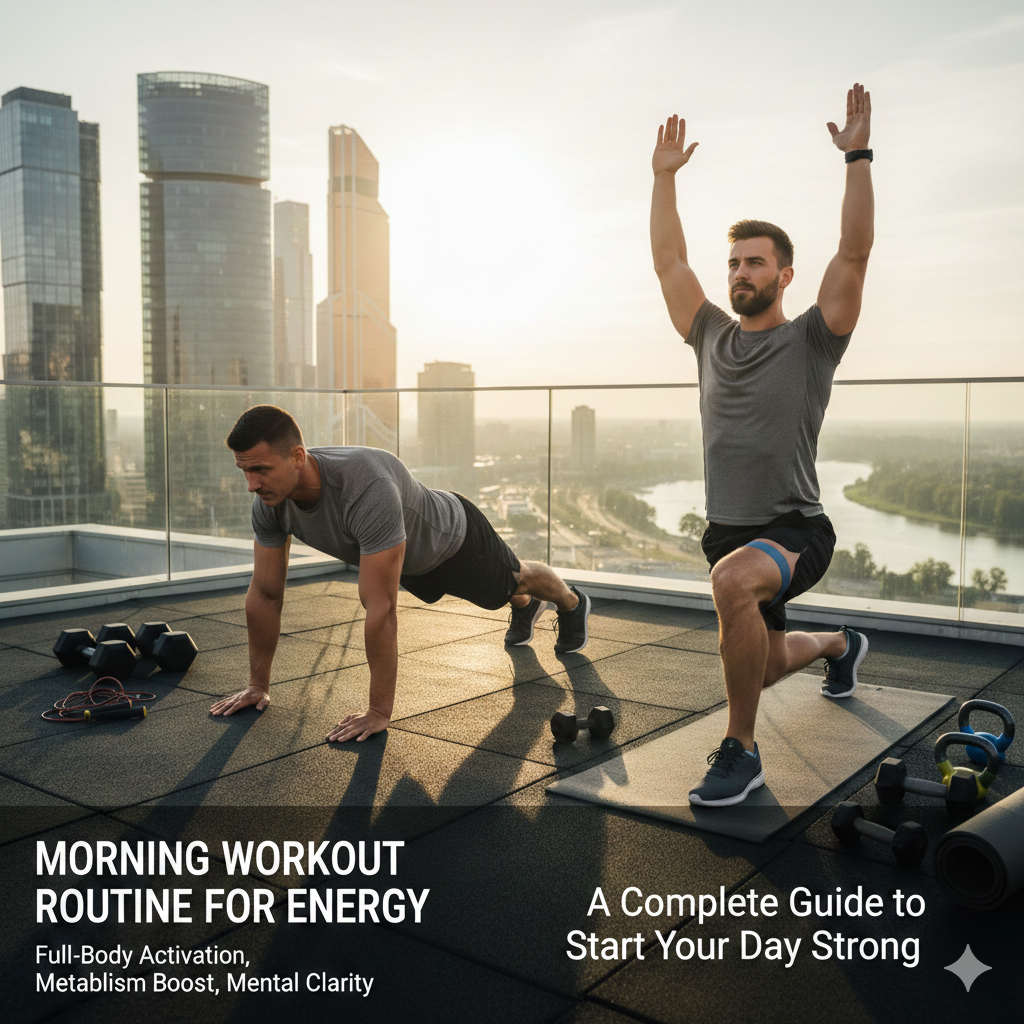
1. If You Feel Mentally Foggy in the Morning
Best Option: Light Cardio + Mobility
- 5 min brisk walk
- 2 min arm swings
- 2 min hip openers
- 1 min deep breathing
Why? Gentle movement wakes up your nervous system without overwhelming it.
2. If You Feel Physically Heavy or Sluggish
Best Option: Moderate Intensity Circuit
- Squats – 15 reps
- Push-ups – 10 reps
- Mountain climbers – 30 sec
- Jump rope – 1 min
Repeat 3 rounds.
This increases circulation and clears that “heavy body” feeling.
3. If You Want Maximum Productivity Energy
Best Option: Short HIIT (High-Intensity Interval Training)
Example:
- 30 sec burpees
- 30 sec rest
- 30 sec high knees
- 30 sec rest
- 30 sec jump squats
- 30 sec rest
Repeat 2–3 rounds.
This stimulates high adrenaline release and keeps you sharp for hours.
Breathing Techniques to Multiply Energy
Most people ignore breathing, but it’s powerful.
Box Breathing (2 Minutes)
- Inhale 4 seconds
- Hold 4 seconds
- Exhale 4 seconds
- Hold 4 seconds
Improves oxygen efficiency and reduces morning anxiety.
Power Breathing
- Fast inhale through nose
- Forceful exhale
- Repeat 20 times
Increases alertness quickly.
Morning Sunlight: The Hidden Energy Booster
Try to get 5–10 minutes of sunlight after your workout.
Benefits:
- Regulates melatonin
- Improves sleep at night
- Boosts vitamin D
- Stabilizes mood
Even standing near a window helps.
Advanced 45-Minute Morning Routine (Full Version)
For serious energy seekers:
Warm-Up (7 Minutes)
- Jump rope – 2 min
- Dynamic lunges – 1 min
- Arm swings – 1 min
- Light jogging – 3 min
Strength Training (20 Minutes)
- Squats – 3 sets
- Push-ups – 3 sets
- Dumbbell rows – 3 sets
- Plank – 3 rounds
- Deadlifts (if gym) – 3 sets
Rest 30–45 seconds between sets.
Cardio Finish (10 Minutes)
- Interval treadmill or outdoor sprint/walk cycle
30 sec fast, 30 sec slow.
Cool Down (8 Minutes)
- Hamstring stretch
- Hip flexor stretch
- Shoulder stretch
- Deep breathing
What to Drink in the Morning for More Energy
Best Options:
- Water with lemon
- Black coffee (small amount)
- Green tea
- Electrolyte water (if sweating heavily)
Avoid:
- Sugary drinks
- Heavy milkshakes
- Energy drinks
Morning Workout for Weight Loss + Energy
If fat loss is your goal:
- Train before heavy breakfast
- Combine strength + cardio
- Keep intensity moderate
- Maintain protein intake
Fat burning is higher in the morning when glycogen is lower.
Signs Your Morning Workout Is Too Intense
If you feel:
- Dizziness
- Extreme fatigue by afternoon
- Poor sleep at night
- Joint pain
Reduce intensity.
Energy workouts should leave you feeling activated, not exhausted.
Psychological Benefits of Morning Training
Morning exercise builds discipline. When you complete something difficult early in the day:
- Your confidence increases
- You feel accomplished
- You make healthier choices all day
It creates a positive feedback loop.
How Long Until You Notice Results?
Week 1:
- Slight energy boost
Week 2:
- Better focus
Week 3:
- Improved stamina
Week 4:
- Habit becomes easier
Consistency is the real secret.
Common Questions
Is it okay to work out on an empty stomach?
Yes, for light to moderate workouts. For intense sessions, eat something small.
What if I’m not a morning person?
Start with 5 minutes. Gradually increase.
Can I replace coffee with exercise?
Yes. Many people reduce caffeine naturally after consistent morning workouts.
Bonus: 5-Minute Emergency Energy Reset
If you wake up extremely tired:
- 20 jumping jacks
- 15 squats
- 10 push-ups
- 30 sec plank
- 10 deep breaths
Done. Instant circulation boost.
Final Advice
Don’t aim for perfection.
Aim for:
- 15–30 minutes
- 4–5 days per week
- Moderate intensity
- Proper sleep
Energy is built through habits, not motivation.
Suggested Internal Links Section for Your Article:
When building a consistent morning workout routine, it’s also important to focus on overall health and wellness. You can explore related topics to make your energy-boosting efforts even more effective:
- Learn general health tips and lifestyle guidance on Health Guide Me.
- Discover how to lose weight and burn fat naturally with simple strategies in this guide.
- Check out exercise routines suitable for all ages to find workouts that fit your schedule and fitness level here.
Adding these internal links not only helps readers navigate to more useful content, but it also improves SEO by spreading link authority across your website.
- American Heart Association – Benefits of Exercise
https://www.heart.org/en/healthy-living/fitness - Mayo Clinic – Exercise: 7 Benefits of Regular Physical Activity
https://www.mayoclinic.org/healthy-lifestyle/fitness/in-depth/exercise/art-20048389 - Harvard Health – Morning Exercise Benefits
https://www.health.harvard.edu/staying-healthy/the-benefits-of-exercise - CDC – Physical Activity Guidelines for Americans
https://www.cdc.gov/physical-activity/basics/index.htm - NIH – Exercise and Mental Health
https://www.nih.gov/news-events/nih-research-matters/exercise-improves-mental-health
How to Use These in Your Article
Example paragraph with outbound links naturally included:
A consistent morning workout routine for energy can boost alertness, improve mood, and enhance overall health. According to the American Heart Association, regular exercise supports cardiovascular health and energy levels. Research from Mayo Clinic shows that even short workouts improve circulation and focus. For more tips on morning workouts and mental health benefits, check NIH studies.
Start your day energized with a morning workout routine for energy. This guide includes 7 simple exercises you can do at home or the gym to boost alertness, improve focus, and increase productivity. Learn how stretching, bodyweight workouts, and quick cardio can naturally enhance your energy. Includes tips on hydration, nutrition, and proven routines backed by science. Perfect for anyone looking to feel active and focused throughout the day.