
Vitamins and Minerals: Functions, Absorption Methods, Food Sources, and Health Importance
Introduction
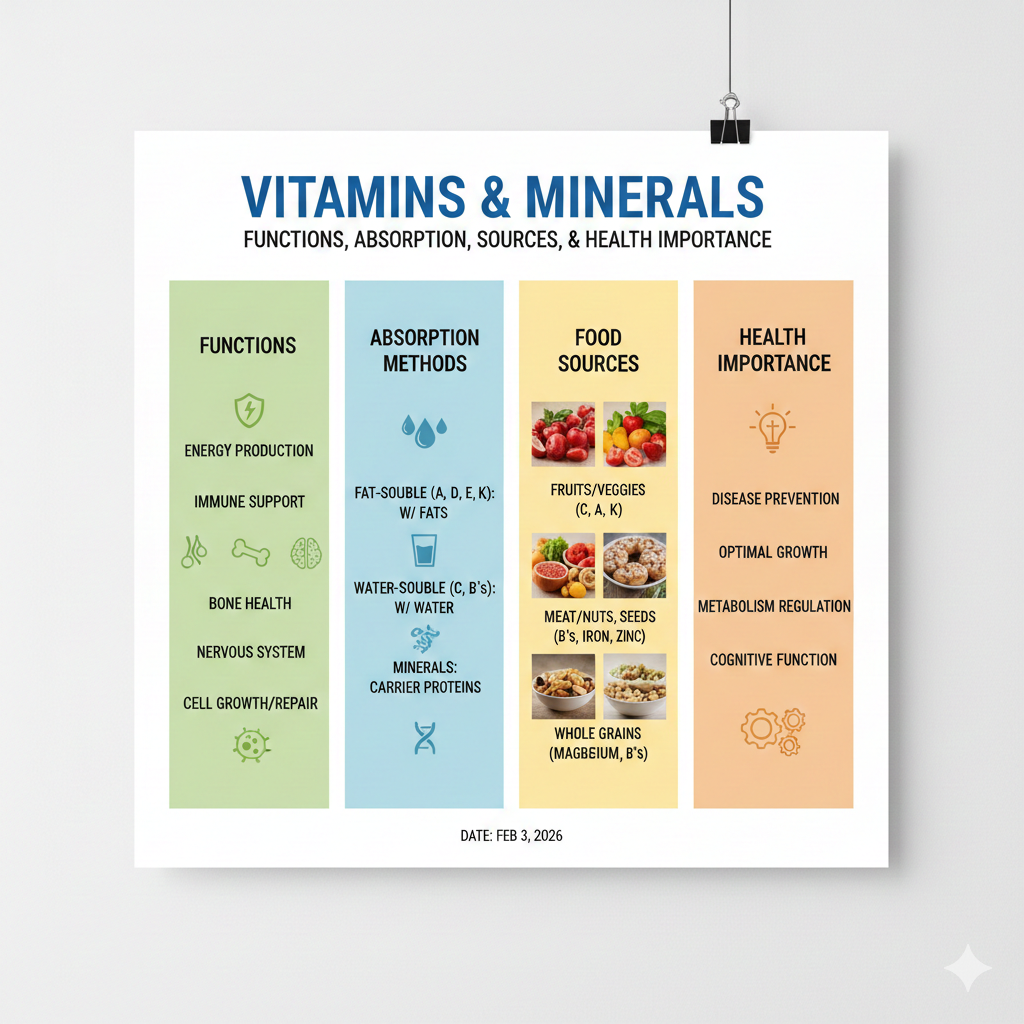
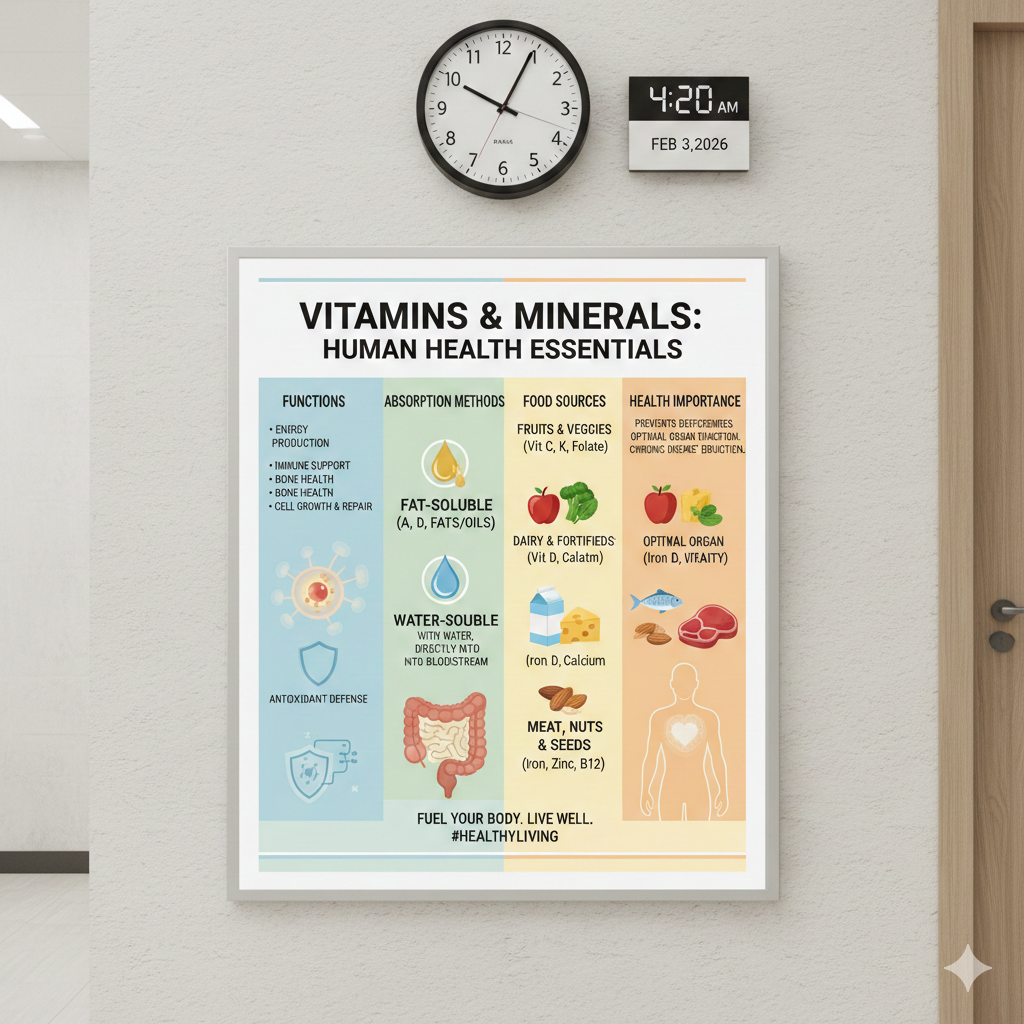
Vitamins and minerals are essential micronutrients required for normal growth, development, and maintenance of the human body. Even though they are needed in small quantities, their impact on health is enormous. They regulate metabolic processes, support immunity, strengthen bones, assist brain function, and help prevent various diseases.
Unlike macronutrients, vitamins and minerals do not provide energy directly, but they enable the body to release and utilize energy from food. A deficiency or imbalance can lead to serious health problems, while proper intake ensures optimal physical and mental performance.
Understanding How the Body Absorbs Vitamins and Minerals
The absorption of vitamins and minerals depends on:
- Type of nutrient (fat-soluble or water-soluble)
- Presence of other nutrients
- Digestive health
- Cooking and food preparation methods
Fat-Soluble Vitamins Absorption
Fat-soluble vitamins (A, D, E, K) require dietary fat for proper absorption. They are absorbed in the small intestine and stored in the liver and fatty tissues.
➡️ Best taken with meals containing healthy fats such as:
- Avocado
- Olive oil
- Nuts and seeds
Water-Soluble Vitamins Absorption
Water-soluble vitamins (Vitamin C and B-complex) dissolve in water and are absorbed directly into the bloodstream. Excess amounts are excreted through urine.
➡️ Must be consumed regularly through food.
Detailed Explanation of Vitamins
Vitamin A
Functions
- Maintains healthy vision and prevents night blindness
- Supports immune system function
- Promotes skin repair and cell growth
- Essential for reproductive health
Absorption Method
Vitamin A is fat-soluble and is better absorbed when consumed with dietary fat.
Food Sources
- Carrots
- Pumpkin
- Sweet potatoes
- Spinach
- Liver
- Egg yolk
Deficiency Effects
- Night blindness
- Dry eyes and skin
- Increased infections
Excess Intake Risks
- Liver damage
- Headaches
- Birth defects (during pregnancy)
Vitamin D
Functions
- Enhances calcium and phosphorus absorption
- Strengthens bones and teeth
- Supports immune response
- Helps regulate mood and mental health
Absorption Method
Produced naturally in the skin through sunlight exposure and absorbed from food with fats.
Food Sources
- Sunlight
- Fatty fish (salmon, sardines)
- Egg yolk
- Fortified milk and cereals
Deficiency Effects
- Weak bones
- Bone pain
- Muscle weakness
Vitamin E
Functions
- Acts as an antioxidant
- Protects cells from oxidative stress
- Improves skin and hair health
Absorption Method
Absorbed in the presence of fats.
Food Sources
- Almonds
- Sunflower seeds
- Vegetable oils
- Spinach
Vitamin K
Functions
- Blood clotting
- Bone mineralization
Food Sources
- Kale
- Broccoli
- Green leafy vegetables
Water-Soluble Vitamins (B-Complex & Vitamin C)
Vitamin C
Functions
- Strengthens immune system
- Helps collagen formation
- Improves iron absorption
- Acts as antioxidant
Absorption Method
Absorbed directly in the intestine, excess excreted in urine.
Food Sources
- Oranges
- Guava
- Papaya
- Bell peppers
Deficiency Effects
- Scurvy
- Fatigue
- Poor wound healing
Vitamin B-Complex (Detailed)
Vitamin B1 (Thiamine)
- Converts carbohydrates into energy
- Supports nerve function
Sources: Whole grains, nuts, legumes
Vitamin B2 (Riboflavin)
- Energy production
- Skin and eye health
Sources: Milk, eggs, leafy greens
Vitamin B6
- Brain development
- Mood regulation
Sources: Bananas, fish, potatoes
Vitamin B9 (Folate)
- DNA synthesis
- Essential during pregnancy
Sources: Green leafy vegetables, beans
Vitamin B12
- Red blood cell formation
- Nerve protection
Sources: Meat, fish, eggs, dairy
Minerals: Functions, Absorption, and Sources
Calcium
Functions
- Bone and teeth formation
- Muscle contraction
- Heart rhythm regulation
Absorption Method
Better absorbed with Vitamin D.
Food Sources
- Milk
- Yogurt
- Cheese
- Sesame seeds
- Green leafy vegetables
Iron
Functions
- Oxygen transport in blood
- Prevents anemia
Absorption Method
- Animal iron (heme iron) absorbed better
- Vitamin C improves absorption
Food Sources
- Red meat
- Lentils
- Spinach
Magnesium
Functions
- Nerve and muscle function
- Blood sugar control
- Heart health
Food Sources
- Nuts
- Seeds
- Whole grains
Zinc
Functions
- Immune defense
- Wound healing
- Growth and development
Food Sources
- Meat
- Seeds
- Nuts
Iodine
Functions
- Thyroid hormone production
- Metabolism regulation
Food Sources
- Iodized salt
- Seafood
Selenium
Functions
- Antioxidant protection
- Thyroid support
Food Sources
- Brazil nuts
- Fish
- Eggs
Best Ways to Get Vitamins and Minerals Naturally
- Eat a variety of fruits and vegetables
- Include whole grains and legumes
- Consume healthy fats
- Avoid overcooking vegetables
- Drink enough water
Conclusion
Vitamins and minerals are essential for life and long-term health. They support immunity, energy production, bone strength, brain function, and disease prevention. The best way to obtain these nutrients is through a balanced and diverse diet. Understanding how they work, how they are absorbed, and where to find them empowers individuals to make healthier dietary choices and live a better quality of life.
Diseases and Health Conditions Caused by Vitamin and Mineral Deficiencies
Vitamins and minerals are essential for maintaining normal body functions. When the body does not receive adequate amounts of these micronutrients over a long period, it can lead to various deficiency diseases and chronic health conditions. Many of these disorders develop slowly and may go unnoticed in the early stages, but they can become severe if not addressed in time.
Below is a detailed explanation of major diseases and health problems caused by deficiencies of specific vitamins and minerals.
Diseases Caused by Vitamin Deficiencies
Vitamin A Deficiency Diseases
Common Diseases and Conditions:
- Night blindness
- Xerophthalmia (dry eyes)
- Increased risk of infections
- Poor skin health
Explanation:
Vitamin A is essential for vision, immune function, and skin health. Deficiency affects the retina, especially the ability to see in low light. Severe deficiency can lead to permanent blindness and weakened immunity, making the body vulnerable to infections.
Vitamin D Deficiency Diseases
Common Diseases and Conditions:
- Rickets (in children)
- Osteomalacia (in adults)
- Osteoporosis
- Muscle weakness and bone pain
Explanation:
Vitamin D is crucial for calcium absorption. Without enough Vitamin D, bones become soft and weak, increasing the risk of fractures and skeletal deformities.
Vitamin E Deficiency Diseases
Common Diseases and Conditions:
- Nerve damage (neuropathy)
- Muscle weakness
- Vision problems
- Weakened immune system
Explanation:
Vitamin E protects cells from oxidative damage. Deficiency mainly affects the nervous system and muscles, leading to coordination problems and muscle degeneration.
Vitamin K Deficiency Diseases
Common Diseases and Conditions:
- Excessive bleeding
- Poor blood clotting
- Hemorrhage
Explanation:
Vitamin K plays a vital role in blood coagulation. Deficiency can cause uncontrolled bleeding even from minor injuries.
Vitamin C Deficiency Diseases
Common Diseases and Conditions:
- Scurvy
- Bleeding gums
- Slow wound healing
- Joint pain and fatigue
Explanation:
Vitamin C is required for collagen formation. Without it, connective tissues weaken, leading to bleeding gums, fragile skin, and delayed wound healing.
Vitamin B-Complex Deficiency Diseases
Vitamin B1 (Thiamine) Deficiency
Diseases:
- Beriberi
- Wernicke-Korsakoff syndrome
Effects:
Nerve damage, muscle weakness, heart failure, mental confusion.
Vitamin B2 (Riboflavin) Deficiency
Diseases:
- Angular stomatitis
- Cracked lips
- Skin inflammation
Vitamin B3 (Niacin) Deficiency
Disease:
- Pellagra
Symptoms:
Dermatitis, diarrhea, dementia (the “3 Ds”).
Vitamin B6 Deficiency
Diseases:
- Anemia
- Depression
- Confusion
- Weak immune response
Vitamin B9 (Folate) Deficiency
Diseases:
- Megaloblastic anemia
- Birth defects (neural tube defects)
Vitamin B12 Deficiency
Diseases:
- Pernicious anemia
- Nerve damage
- Memory loss and confusion

Diseases Caused by Mineral Deficiencies
Calcium Deficiency Diseases
Common Diseases and Conditions:
- Osteoporosis
- Weak bones and teeth
- Muscle cramps
- Increased fracture risk
Explanation:
Calcium is the main mineral for bone strength. Long-term deficiency leads to bone thinning and brittleness.
Iron Deficiency Diseases
Disease:
- Iron-deficiency anemia
Symptoms:
- Fatigue
- Pale skin
- Shortness of breath
- Dizziness
Explanation:
Iron is required for hemoglobin production. Deficiency reduces oxygen transport in the blood.
Magnesium Deficiency Diseases
Common Conditions:
- Muscle cramps
- Irregular heartbeat
- Anxiety and irritability
- Fatigue
Potassium Deficiency Diseases
Common Conditions:
- Muscle weakness
- Heart rhythm disturbances
- High blood pressure
Zinc Deficiency Diseases
Common Conditions:
- Weak immune system
- Frequent infections
- Delayed wound healing
- Hair loss
Iodine Deficiency Diseases
Diseases:
- Goiter
- Hypothyroidism
- Mental development issues in children
Explanation:
Iodine is essential for thyroid hormone production. Deficiency affects metabolism and growth.
Selenium Deficiency Diseases
Common Conditions:
- Weak immunity
- Thyroid dysfunction
- Heart muscle disorders
Long-Term Health Risks of Micronutrient Deficiencies
Chronic vitamin and mineral deficiencies can increase the risk of:
- Heart disease
- Diabetes
- Cognitive decline
- Poor immunity
- Delayed growth in children
- Pregnancy complications
Conclusion
Vitamin and mineral deficiencies can lead to a wide range of diseases affecting the eyes, bones, nerves, blood, immune system, and internal organs. Many of these conditions are preventable through a balanced diet that includes fruits, vegetables, whole grains, lean proteins, and healthy fats. Early identification and correction of deficiencies play a key role in maintaining long-term health and preventing serious complications.
What Happens When the Body Lacks Vitamins (Effects of Vitamin Deficiency)
When the body does not receive enough vitamins over a long period, it begins to show clear physical, mental, and functional changes. These effects may start mildly but can gradually develop into serious health problems if not corrected.
Below are the major effects of vitamin deficiency, explained clearly and separately.
General Effects of Vitamin Deficiency (Overall Body Effects)
- Constant tiredness and low energy
- Weak immune system and frequent illnesses
- Slow wound healing
- Poor growth and development
- Increased risk of chronic diseases
- Poor concentration and memory problems
Physical Changes Caused by Vitamin Deficiency
1. Weak Immunity
Vitamin deficiency reduces the body’s ability to fight infections. People may experience:
- Frequent colds and flu
- Repeated infections
- Longer recovery time from illness
(Vitamins A, C, D, and B6 are especially important for immunity.)
2. Skin, Hair, and Nail Problems
Lack of vitamins directly affects skin and appearance:
- Dry, dull, or flaky skin
- Acne and skin inflammation
- Hair fall and hair thinning
- Brittle and weak nails
(Commonly linked to Vitamin A, B-complex, C, and E deficiencies.)
3. Vision Problems
Vitamin deficiency can damage eye health:
- Poor night vision
- Dry eyes
- Eye irritation
(Mainly due to Vitamin A deficiency.)
4. Bone and Muscle Weakness
Insufficient vitamins can weaken bones and muscles:
- Bone pain
- Muscle cramps
- Weak posture
- Increased fracture risk
(Vitamin D and Vitamin K play a major role here.)
5. Slow Wound Healing
When vitamins are low, the body struggles to repair tissues:
- Cuts take longer to heal
- Wounds get infected easily
(Vitamin C and Vitamin A are essential for tissue repair.)
Mental and Brain-Related Effects of Vitamin Deficiency
6. Memory and Concentration Problems
Vitamin deficiency affects brain function:
- Poor focus
- Forgetfulness
- Reduced learning ability
(Vitamins B12, B6, and folate are critical for brain health.)
7. Mood Changes and Mental Health Issues
Low vitamin levels can cause:
- Depression
- Anxiety
- Irritability
- Mood swings
(Vitamin D and B-complex deficiencies are commonly linked.)
8. Sleep Problems
Vitamin deficiency may disturb sleep patterns:
- Difficulty falling asleep
- Poor sleep quality
- Feeling tired even after sleeping
Blood and Energy-Related Effects
9. Fatigue and Weakness
One of the most common effects:
- Constant tiredness
- Low stamina
- Weak muscles
(Linked to deficiencies of Vitamin B12, B6, and folate.)
10. Dizziness and Headaches
Low vitamin levels can reduce oxygen supply and nerve function:
- Frequent headaches
- Light-headedness
- Difficulty standing for long periods
Digestive and Appetite-Related Effects
11. Loss of Appetite
Vitamin deficiency can reduce hunger:
- Poor appetite
- Weight loss
- Digestive discomfort
12. Mouth and Tongue Problems
Common visible signs:
- Cracked lips
- Mouth ulcers
- Swollen or sore tongue
(Usually due to B-vitamin deficiency.)
Long-Term Effects of Untreated Vitamin Deficiency
If vitamin deficiency continues for a long time, it can lead to:
- Permanent nerve damage
- Weak bones and osteoporosis
- Chronic fatigue syndrome
- Poor cognitive function
- Increased risk of heart disease
Who Is at Higher Risk of Vitamin Deficiency?
- People with poor diet
- Elderly individuals
- Pregnant and breastfeeding women
- People with digestive disorders
- Individuals under chronic stress
- Alcohol and smoking users
How to Prevent Vitamin Deficiency
- Eat a balanced and varied diet
- Include fruits and vegetables daily
- Consume whole grains and healthy fats
- Avoid excessive junk food
- Get adequate sunlight exposure
- Use supplements only under medical advice
Conclusion
Vitamin deficiency affects almost every system in the human body, from immunity and energy levels to brain function and bone strength. Many early symptoms are ignored, but long-term deficiency can cause serious and irreversible health problems. Maintaining adequate vitamin intake through a healthy diet is essential for long-term physical and mental well-being.
Importance of Vitamins and Minerals for Human Health
Vitamins and minerals support almost every system in the human body. They help convert food into energy, strengthen the immune system, maintain healthy bones and muscles, improve brain function, and protect the body from chronic diseases. A deficiency in these nutrients can lead to fatigue, weak immunity, poor growth, anemia, osteoporosis, and other serious health problems.
Maintaining proper vitamin and mineral intake through natural food sources is one of the most effective ways to promote overall well-being and long-term health.
Internal Resources (Recommended Reading)
For more detailed and practical health-related guidance, you can explore the following internal resources:
- Health Guide Me – Nutrition & Wellness Hub
https://healthguideme.com/
A comprehensive health and wellness website covering nutrition, fitness, disease prevention, and healthy lifestyle tips. - Fat Burn Exercises and Fat Burn Foods
https://healthguideme.com/fat-burn-exercises-and-fat-burn-foods/
Learn about effective exercises and foods that support fat burning and weight management while maintaining proper nutrient balance. - Protein Supplements and Protein-Rich Foods
https://healthguideme.com/protein-supplements-and-protein-rich-foods/
A detailed guide on protein supplements, natural protein sources, and their role in muscle growth and overall nutrition.
These internal links help readers understand how vitamins and minerals work together with proper exercise, protein intake, and a balanced diet.
External Resources (Trusted DoFollow Health Websites)
To ensure accuracy and credibility, the following authoritative external resources provide scientifically backed information on vitamins, minerals, and nutrition:
- World Health Organization (WHO)
https://www.who.int
Offers global health guidelines and evidence-based information on nutrition and micronutrient deficiencies. - National Institutes of Health – Office of Dietary Supplements
https://ods.od.nih.gov
Provides detailed fact sheets on vitamins, minerals, recommended daily intake, and deficiency symptoms. - Harvard T.H. Chan School of Public Health – Nutrition Source
https://www.hsph.harvard.edu/nutritionsource/
A trusted source for research-based nutrition advice, including micronutrients and healthy eating patterns. - Centers for Disease Control and Prevention (CDC) – Nutrition
https://www.cdc.gov/nutrition
Covers the role of vitamins and minerals in disease prevention and public health.