

Home Remedies for Common Diseases: Detailed Natural Treatment Guide
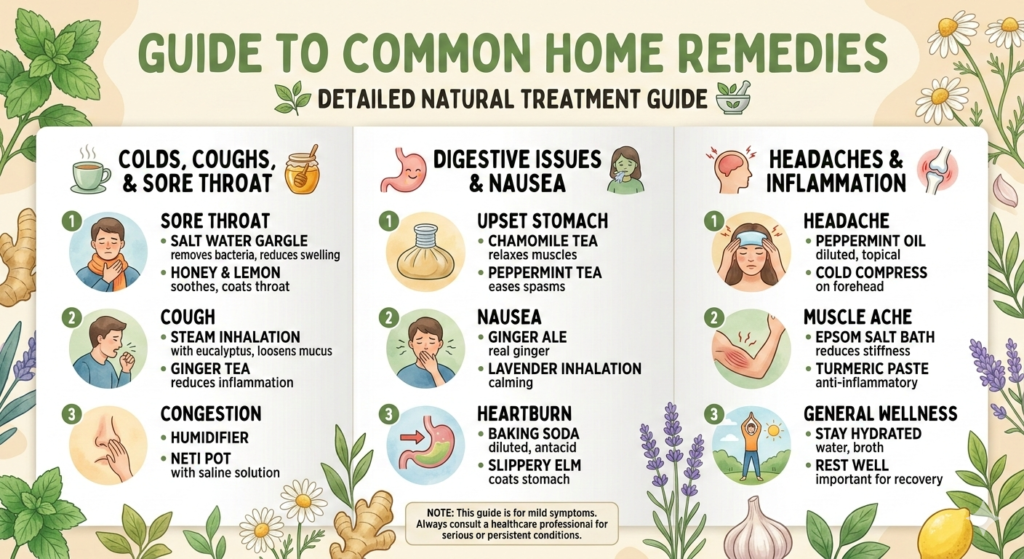
Home remedies for common diseases have been practiced for centuries across cultures. Many mild health problems such as colds, coughs, headaches, digestive issues, and minor infections can be effectively managed using natural ingredients found at home. These remedies are affordable, accessible, and often have fewer side effects when used properly.
However, it is important to understand that home remedies are best for mild conditions. Severe or chronic illnesses require professional medical attention.
1. Home Remedies for Common Cold and Flu
The common cold and flu are viral infections affecting the respiratory system. Symptoms include sneezing, sore throat, runny nose, mild fever, cough, and fatigue.
Ginger Tea for Cold Relief
Ginger contains bioactive compounds like gingerol, which have anti-inflammatory and antiviral properties.
Benefits:
- Reduces throat inflammation
- Helps relieve congestion
- Boosts immune response
- Improves circulation
How to Prepare:
- Boil 1–2 inches of fresh ginger in water for 10–15 minutes
- Add honey and lemon
- Drink 2–3 times daily
Why It Works:
Ginger increases body warmth and stimulates mucus flow, helping clear respiratory passages.
Honey and Lemon for Sore Throat
Honey acts as a natural cough suppressant and antibacterial agent.
Benefits:
- Soothes throat irritation
- Reduces coughing at night
- Supports immune function
Important Note:
Do not give honey to children under one year old.
Steam Inhalation for Nasal Congestion
Steam inhalation loosens mucus and opens blocked sinuses.
How to Use:
- Boil water in a bowl
- Cover your head with a towel
- Inhale steam for 5–10 minutes
Optional: Add eucalyptus oil for extra relief.
2. Home Remedies for Headache
Headaches are often caused by stress, dehydration, lack of sleep, or eye strain.
Hydration Therapy
Dehydration is a common cause of headaches.
- Drink 2–3 liters of water daily
- Avoid excessive caffeine
Proper hydration improves blood circulation and oxygen flow to the brain.
Peppermint Oil
Peppermint contains menthol, which relaxes muscles and improves blood flow.
How to Apply:
- Dilute with carrier oil
- Massage gently on temples
This works especially well for tension headaches.
Cold Compress
Cold therapy reduces inflammation in blood vessels.
Place a cold cloth or ice pack wrapped in fabric on the forehead for 15 minutes.
3. Home Remedies for Digestive Problems
Digestive disorders such as indigestion, bloating, and stomach pain are very common due to unhealthy diets and stress.
Fennel Seeds
Fennel seeds contain compounds that relax gastrointestinal muscles.
Benefits:
- Reduces bloating
- Improves digestion
- Relieves gas
Chew one teaspoon after meals.
Baking Soda for Acidity
Baking soda neutralizes excess stomach acid.
How to Use:
- Mix ½ teaspoon in a glass of water
- Drink occasionally (not daily)
Excess use may disturb electrolyte balance.
Apple Cider Vinegar
Although acidic, it may help balance stomach pH levels.
- Mix 1 tablespoon in warm water
- Drink before meals
Avoid if you have ulcers or severe gastritis.
4. Home Remedies for Cough
Cough can be dry or productive (with mucus).
Honey as Natural Cough Suppressant
Studies show honey can reduce cough frequency better than some over-the-counter syrups.
Take 1 tablespoon before sleep.
Ginger and Salt
Ginger reduces inflammation, while salt acts as a mild antiseptic.
Chew small ginger slices with a pinch of salt.
Tulsi (Holy Basil)
Tulsi has antimicrobial and immunity-boosting properties.
Boil 5–6 leaves in water and drink as tea.
5. Home Remedies for Fever
Fever is the body’s natural defense mechanism against infection.
Rest and Fluids
Hydration prevents dehydration during fever.
Drink:
- Water
- Coconut water
- Herbal teas
- Clear soups
Basil Tea
Basil has natural antibacterial properties.
Boil basil leaves and drink warm to help reduce fever symptoms.
6. Home Remedies for Acne
Acne develops due to excess oil, bacteria, and clogged pores.
Aloe Vera
Aloe contains anti-inflammatory and antibacterial compounds.
Benefits:
- Reduces redness
- Heals acne scars
- Moisturizes skin
Apply fresh gel and leave for 20 minutes.
Tea Tree Oil
Tea tree oil has strong antibacterial properties.
Always dilute before applying to avoid skin irritation.
7. Home Remedies for Constipation
Constipation occurs due to low fiber intake and dehydration.
Fiber-Rich Diet
Include:
- Fruits (papaya, banana)
- Vegetables
- Whole grains
Fiber adds bulk to stool and improves bowel movement.
Warm Lemon Water
Drinking warm lemon water in the morning stimulates digestion and bowel movement.
8. Home Remedies for High Blood Pressure
High blood pressure (hypertension) requires medical supervision. Home remedies can support but not replace treatment.
Garlic
Garlic contains allicin, which helps relax blood vessels.
Eat one raw clove daily.
Hibiscus Tea
Hibiscus tea may help lower systolic and diastolic blood pressure.
Drink once daily.
9. Home Remedies for Diabetes Support
Diabetes management requires doctor guidance.
Cinnamon
Cinnamon may improve insulin sensitivity.
Add small amounts to tea or meals.
Avoid excessive use.
Fenugreek Seeds
Soak overnight and drink the water in the morning.
May help regulate blood sugar levels.
Safety Precautions for Using Home Remedies
Even natural remedies can cause side effects.
Important guidelines:
- Do not exceed recommended amounts
- Avoid mixing with prescribed medication without advice
- Stop if allergic reaction occurs
- Pregnant women should consult a doctor
- Children need proper dosage adjustments
When to Seek Medical Help
Home remedies are suitable for mild conditions only.
See a doctor if:
- Fever lasts more than 3 days
- Severe abdominal pain occurs
- Breathing difficulty appears
- Blood sugar or blood pressure remains uncontrolled
- Symptoms worsen instead of improving
Final Thoughts on Home Remedies for Common Diseases
Home remedies for common diseases offer a natural, cost-effective way to manage everyday health issues. Ingredients like ginger, honey, garlic, aloe vera, and fennel have powerful medicinal properties that support the body’s healing process.
However, responsible usage is key. Natural treatment works best when combined with a healthy lifestyle, balanced diet, exercise, and proper medical guidance.
10. Home Remedies for Skin Allergies and Rashes
Skin allergies, itching, and mild rashes can occur due to dust, food reactions, heat, or chemical exposure.
Oatmeal Bath
Oatmeal has anti-inflammatory properties that soothe irritated skin.
How to Use:
- Grind plain oats into powder
- Add to lukewarm bath water
- Soak for 15–20 minutes
Benefits:
- Reduces itching
- Calms inflammation
- Moisturizes dry skin
Coconut Oil
Coconut oil contains antimicrobial and moisturizing properties.
Apply thin layer on affected area twice daily.
⚠️ Avoid using on open wounds.
Aloe Vera Gel
Fresh aloe gel helps reduce redness and irritation.
Apply directly and leave for 20 minutes.
11. Home Remedies for Insomnia (Sleep Problems)
Poor sleep affects immunity, brain function, and mental health.
Warm Milk Before Bed
Milk contains tryptophan, which helps produce melatonin (sleep hormone).
Drink 1 cup of warm milk 30 minutes before sleep.
Chamomile Tea
Chamomile has mild sedative effects.
Drink before bedtime to relax the nervous system.
Reduce Screen Time
Avoid phones and laptops 1 hour before sleep.
Blue light suppresses melatonin production.
12. Home Remedies for Stress and Anxiety
Modern lifestyle increases stress levels, affecting physical health.
Deep Breathing Exercises
Practice 4-7-8 breathing method:
- Inhale for 4 seconds
- Hold for 7 seconds
- Exhale for 8 seconds
Repeat 5 times.
Ashwagandha
Ashwagandha is known for reducing cortisol (stress hormone).
⚠️ Consult doctor before regular use.
Regular Exercise
30 minutes of walking reduces anxiety and improves mood.
13. Home Remedies for Minor Burns
Minor kitchen burns can be treated at home.
Cool Running Water
Hold burn under cool water for 10–15 minutes.
This reduces heat damage.
Aloe Vera
Apply pure aloe gel after cooling the burn.
Helps skin healing.
⚠️ Seek medical help if:
- Burn is deep
- Skin is severely blistered
- Burn covers large area
14. Home Remedies for Ear Pain
Mild ear pain may be caused by cold or sinus infection.
Warm Compress
Place warm cloth near ear for 10 minutes.
Improves circulation and reduces pain.
Garlic Oil
Garlic has antimicrobial properties.
Use only a few drops of diluted garlic oil.
⚠️ Do not use if eardrum is damaged.

15. Home Remedies for Bad Breath
Bad breath is often caused by bacteria in the mouth.
Salt Water Gargle
Reduces bacteria growth.
Clove Chewing
Clove acts as natural antibacterial.
Chew one clove after meals.
Proper Oral Hygiene
Brush twice daily and clean tongue properly.
16. Immune System Boosting Natural Remedies
Strong immunity prevents common diseases.
Vitamin C Rich Foods
Include:
- Oranges
- Lemons
- Guava
- Kiwi
Turmeric and Black Pepper
Black pepper increases curcumin absorption in turmeric.
Adequate Sleep
7–8 hours daily sleep strengthens immunity.
17. Lifestyle Habits That Prevent Common Diseases
Home remedies work best when combined with healthy habits.
✔ Balanced Diet
✔ Regular Exercise
✔ Hydration (2–3 liters water daily)
✔ Stress Management
✔ Proper Hygiene
Prevention is always better than cure.
1. Are home remedies safe for everyone?
Most are safe for mild conditions, but pregnant women, children, and people with chronic diseases should consult a doctor.
2. How long should I try a home remedy?
If symptoms do not improve within 2–3 days, seek medical advice.
3. Can home remedies replace medication?
No. They support treatment but should not replace prescribed medicine.
15 Powerful Home Remedies for Common Diseases That Actually Work
In today’s busy lifestyle, many people prefer home remedies for common diseases to manage minor health problems naturally. From cold and cough to digestion issues and headaches, natural remedies can provide safe and effective relief when used correctly.
These remedies are affordable, easily available, and often come with fewer side effects compared to over-the-counter medicines. However, they should not replace medical treatment for serious conditions.
1. Ginger Tea for Cold and Flu
Ginger is one of the most powerful natural ingredients used in home remedies for common diseases. It contains anti-inflammatory and antiviral properties that help reduce cold and flu symptoms.
How to use:
- Boil fresh ginger slices in water
- Add honey and lemon
- Drink 2–3 times daily
It helps clear congestion, soothe sore throat, and strengthen the immune system.
If you want to improve your overall immunity, maintaining a healthy lifestyle is important. You can read more health tips on our main health resource page here:
👉 https://healthguideme.com/
2. Honey and Lemon for Cough
Honey acts as a natural cough suppressant while lemon provides vitamin C.
Benefits:
- Reduces throat irritation
- Boosts immunity
- Helps control night cough
Mix 1 tablespoon honey with warm water and lemon juice.
3. Steam Inhalation for Blocked Nose
Steam inhalation loosens mucus and opens nasal passages.
Boil water, cover your head with a towel, and inhale for 10 minutes. You may add eucalyptus oil for better results.
4. Hydration for Headache Relief
Many headaches are caused by dehydration. Drinking enough water improves blood circulation and oxygen flow to the brain.
If your headache is linked to heart or blood pressure issues, understanding risk factors is important. Learn more here:
👉 https://healthguideme.com/heart-disease-risk-factors/
5. Peppermint Oil for Tension Headache
Peppermint oil contains menthol, which relaxes muscles and improves blood flow.
Dilute and gently massage on temples.
6. Fennel Seeds for Digestion
Fennel seeds help relieve bloating and improve digestion.
Chew 1 teaspoon after meals to reduce gas and stomach discomfort.
7. Baking Soda for Acidity
Baking soda neutralizes excess stomach acid.
Mix ½ teaspoon in a glass of water (occasional use only).
8. Aloe Vera for Skin Problems
Aloe vera reduces acne, redness, and minor burns.
Apply fresh gel directly to the affected area and leave for 20 minutes.
9. Garlic for High Blood Pressure Support
Garlic contains allicin, which helps relax blood vessels and improve circulation.
Eat one raw clove daily (consult doctor if you are on medication).
10. Cinnamon for Blood Sugar Control
Cinnamon may improve insulin sensitivity and help regulate blood sugar levels.
Add small amounts to tea or meals.
11. Warm Lemon Water for Constipation
Drinking warm lemon water in the morning stimulates digestion and improves bowel movement.
12. Tulsi (Holy Basil) for Immunity
Tulsi has antimicrobial and immunity-boosting properties.
Boil 5–6 leaves in water and drink as tea.
13. Chamomile Tea for Better Sleep
Chamomile relaxes the nervous system and helps manage insomnia.
Drink before bedtime.
14. Deep Breathing for Stress
Stress weakens the immune system. Practice deep breathing daily to control anxiety and improve overall health.
Regular physical activity also improves energy levels and reduces stress. Learn more here:
👉 https://healthguideme.com/morning-workout-routine-for-energy/
15. Proper Lifestyle Habits
Home remedies work best when combined with:
- Balanced diet
- Regular exercise
- 7–8 hours of sleep
- Proper hydration
- Stress management
Prevention is always better than cure.
Safety Tips
- Do not replace prescribed medication without medical advice
- Stop if allergic reactions occur
- Consult a doctor if symptoms persist more than 3 days
- Pregnant women and children need special care
15 Powerful Home Remedies for Common Diseases That Actually Work
Home remedies for common diseases are widely used to manage minor illnesses naturally. While these remedies are helpful for mild conditions, it is important to rely on medically verified sources for accurate health information.
According to the World Health Organization, traditional and complementary medicine is used globally, but safe usage and medical guidance are important.
1. Ginger Tea for Cold and Flu
Ginger is known for its anti-inflammatory and antiviral properties. It helps relieve congestion, sore throat, and mild fever.
Research and cold management advice can be found at the Centers for Disease Control and Prevention website, which explains how viral infections affect the respiratory system.
👉 External Resource:
https://www.cdc.gov/
2. Honey for Cough Relief
Honey is a natural cough suppressant. Studies referenced by the Mayo Clinic suggest honey may reduce nighttime coughing in children over one year old.
👉 External Resource:
https://www.mayoclinic.org/
3. Steam Inhalation for Nasal Congestion
Steam inhalation helps loosen mucus and ease sinus pressure. For sinus infection guidance, refer to Cleveland Clinic.
👉 External Resource:
https://my.clevelandclinic.org/
4. Hydration for Headache
Dehydration is a common headache trigger. The National Institutes of Health provides research-backed health information on hydration and wellness.
👉 External Resource:
https://www.nih.gov/
5. Garlic for Heart Health
Garlic may support heart health by improving blood circulation. Heart disease prevention guidelines are available from the American Heart Association.
👉 External Resource:
https://www.heart.org/
6. Cinnamon for Blood Sugar Control
Cinnamon may improve insulin sensitivity. For diabetes management recommendations, visit the American Diabetes Association.
👉 External Resource:
https://diabetes.org/
7. Aloe Vera for Skin Care
Aloe vera helps soothe skin irritation and minor burns. Dermatology guidelines can be found at the American Academy of Dermatology.
👉 External Resource:
https://www.aad.org/
15 Powerful Home Remedies for Common Diseases That Actually Work
Home remedies for common diseases are becoming increasingly popular as people look for safe and natural ways to manage everyday health problems. Instead of immediately using medication, many individuals prefer home remedies for common diseases such as cold, cough, headache, digestive issues, and skin problems.
Using home remedies for common diseases can be effective for mild conditions, especially when combined with a healthy lifestyle and proper medical awareness.
1. Ginger Tea – One of the Best Home Remedies for Common Diseases
Ginger tea is widely known among the most effective home remedies for common diseases like cold and flu. Ginger contains anti-inflammatory and antiviral properties that help the body fight infections naturally.
Drinking ginger tea regularly can:
- Reduce throat irritation
- Clear nasal congestion
- Strengthen immunity
Because of these benefits, ginger remains one of the most trusted home remedies for common diseases affecting the respiratory system.
2. Honey and Lemon for Cough Relief
Honey and lemon mixture is another powerful option in home remedies for common diseases. Honey soothes the throat, while lemon provides vitamin C to boost immunity.
This combination is especially helpful when managing mild cough and sore throat using home remedies for common diseases.
3. Steam Inhalation for Sinus Relief
Steam inhalation is a simple yet effective method included in home remedies for common diseases related to sinus congestion and blocked nose.
It helps:
- Loosen mucus
- Reduce sinus pressure
- Improve breathing
4. Hydration Therapy for Headaches
Dehydration is a common cause of headaches. Drinking enough water is one of the easiest home remedies for common diseases that many people ignore.
Staying hydrated improves circulation and reduces headache frequency.
5. Fennel Seeds for Digestive Problems
Digestive discomfort is common today. Chewing fennel seeds after meals is among the traditional home remedies for common diseases related to bloating and indigestion.
6. Baking Soda for Acidity
Baking soda neutralizes stomach acid. It is sometimes used in home remedies for common diseases involving heartburn and acidity.
(Use occasionally, not daily.)
7. Aloe Vera for Skin Issues
Aloe vera gel is widely used in home remedies for common diseases affecting the skin, such as acne, minor burns, and irritation.
Its anti-inflammatory properties promote healing naturally.
8. Garlic for Blood Pressure Support
Garlic supports heart health and circulation. It is often included in home remedies for common diseases related to high blood pressure.
However, it should not replace prescribed medication.
9. Cinnamon for Blood Sugar Balance
Cinnamon may improve insulin sensitivity. Many people include it in their diet as part of home remedies for common diseases related to blood sugar control.
10. Warm Lemon Water for Constipation
Warm lemon water in the morning stimulates digestion. It is one of the simplest home remedies for common diseases related to constipation.
11. Chamomile Tea for Better Sleep
Sleep problems weaken immunity. Chamomile tea is often recommended in home remedies for common diseases connected to stress and insomnia.
12. Tulsi (Holy Basil) for Immunity
Tulsi leaves are powerful natural herbs used in traditional home remedies for common diseases to strengthen the immune system.
Why Home Remedies for Common Diseases Are Effective
The reason home remedies for common diseases work is because many natural ingredients contain:
- Antioxidants
- Anti-inflammatory compounds
- Antibacterial properties
- Immune-boosting nutrients
When used properly, home remedies for common diseases support the body’s natural healing system without heavy side effects.
Safety Tips When Using Home Remedies for Common Diseases
Although home remedies for common diseases are natural, they must be used responsibly.
- Do not overdose
- Do not replace prescribed medication
- Consult a doctor if symptoms persist
- Stop immediately if allergic reaction occurs