Hair Transplant: Complete Guide From Start to Finish (Procedure, Cost, Results, Risks)

Hair transplant is the most effective and permanent solution for advanced hair loss in both men and women. With modern medical technology, hair transplant results now look natural, dense, and long-lasting when done correctly.
This complete English guide explains everything about hair transplant, including:
- What hair transplant really is
- Who needs it and who should avoid it
- Full procedure from start to finish
- Types of hair transplant methods
- Medicines before and after surgery
- Results timeline, risks, and expectations
⚠️ Medical Disclaimer: This article is for educational purposes only. It does not replace professional medical advice. Always consult a qualified dermatologist or hair transplant surgeon before making medical decisions.
1. Understanding the Hair Growth Cycle (Scientific Proof)
Hair does not grow continuously. It follows a cycle with three main stages:
1.1 Anagen Phase (Growth Phase)
- Lasts 2–7 years
- Hair grows about 1–1.5 cm per month
- 85–90% of scalp hair is in this phase
Longer anagen phase = longer hair potential
1.2 Catagen Phase (Transition Phase)
- Lasts 2–3 weeks
- Hair follicle shrinks
- Growth slows down
1.3 Telogen Phase (Resting Phase)
- Lasts 2–4 months
- Hair falls out naturally
- New hair begins growing underneath
➡️ Hair fall is normal (50–100 hairs/day). Excess hair fall happens when this cycle is disturbed.
2. Main Causes of Hair Fall and Poor Growth
2.1 Genetic Hair Loss (Androgenetic Alopecia)
- Most common cause
- Caused by DHT (Dihydrotestosterone)
- Affects men and women
- Progressive if untreated
2.2 Nutritional Deficiencies
- Iron deficiency
- Vitamin D deficiency
- Vitamin B12 deficiency
- Protein deficiency
- Zinc and biotin deficiency
2.3 Hormonal Imbalance
- Thyroid disorders
- PCOS (in women)
- Post‑pregnancy hair loss
- Menopause
2.4 Stress and Lifestyle
- Chronic stress increases cortisol
- Poor sleep
- Smoking and alcohol
- Crash dieting
2.5 Scalp Problems
- Dandruff
- Fungal infections
- Excess oil or dryness
- Inflammation
3. Natural Hair Growth Methods (Evidence‑Based)
3.1 Scalp Massage (Proven Method)
- Increases blood circulation
- Activates dormant follicles
- Reduces stress hormones
How to do:
- 5–10 minutes daily
- Circular motion with fingertips
- Use oil for better absorption
3.2 Natural Oils That Support Growth
Coconut Oil
- Reduces protein loss
- Strengthens hair shaft
Castor Oil
- Rich in ricinoleic acid
- Improves scalp circulation
Rosemary Oil (Strong Evidence)
- Comparable to minoxidil (mild cases)
- Reduces DHT on scalp
How to use: Mix essential oil with carrier oil (never use pure essential oil).
3.3 Aloe Vera
- Soothes scalp
- Reduces dandruff
- Improves follicle health
3.4 Onion Juice (Clinical Evidence)
- High sulfur content
- Improves collagen production
- Shown to help alopecia areata

4. Diet for Faster Hair Growth (Very Important)
4.1 Protein‑Rich Foods
- Eggs
- Fish
- Chicken
- Lentils
- Greek yogurt
4.2 Vitamins and Minerals
| Nutrient | Function |
|---|---|
| Iron | Oxygen to follicles |
| Vitamin D | Follicle activation |
| Biotin | Keratin production |
| Zinc | Tissue repair |
| Omega‑3 | Scalp hydration |
4.3 Hydration
- Minimum 2–3 liters of water/day
- Dehydration weakens hair strands
5. Hair Growth Products (What Really Works)
5.1 Minoxidil (Strong Scientific Proof)
- FDA approved
- Available as 2% and 5%
- Improves blood flow to follicles
Results:
- Initial shedding (normal)
- Visible improvement in 3–6 months
- Needs continuous use
5.2 Hair Growth Serums
- Peptides
- Caffeine
- Redensyl, Procapil
⚠️ Results vary – not permanent
5.3 Anti‑DHT Shampoos
- Ketoconazole
- Caffeine shampoos
- Saw palmetto extracts
6. Medicines for Hair Growth (Doctor‑Prescribed)
6.1 Finasteride (Men)
- Blocks DHT
- Slows hair loss
- Oral or topical
Side effects (rare):
- Reduced libido
- Erectile issues
6.2 Dutasteride
- Stronger than finasteride
- Used in advanced cases
6.3 Supplements
- Biotin (only if deficient)
- Iron (after blood test)
- Multivitamins
7. Medical Treatments
7.1 PRP (Platelet‑Rich Plasma)
- Uses patient’s blood
- Growth factors injected into scalp
- Improves thickness
7.2 Microneedling
- Stimulates collagen
- Improves minoxidil absorption
7.3 Hair Transplant (Permanent Solution)
- FUE / FUT methods
- Requires stable donor area
8. Proof, Results, and Expectations
- Natural methods: slow but safe
- Medicines: effective with consistency
- Genetics cannot be fully reversed
- Early treatment gives best results
9. Common Myths About Hair Growth
❌ Shaving makes hair thicker
❌ Oils alone cure baldness
❌ Expensive shampoo stops hair fall
❌ Hair fall means permanent baldness
Minoxidil: Separate Complete Guide (Before & After Hair Transplant)
Minoxidil is one of the most scientifically proven treatments for hair loss. Even when a hair transplant is planned or already done, minoxidil plays a separate and important role.
9.1 What Is Minoxidil?
Minoxidil is a topical vasodilator medication originally developed for blood pressure. During clinical use, doctors discovered that it stimulates hair growth.
- FDA approved for hair loss
- Used by both men and women
- Available as topical solution or foam
9.2 How Minoxidil Works (Scientific Explanation)
Minoxidil:
- Increases blood flow to hair follicles
- Extends the anagen (growth) phase
- Reactivates miniaturized follicles
- Improves hair thickness over time
⚠️ Minoxidil does not cure genetics, but it slows and controls hair loss.
9.3 Types and Strengths of Minoxidil
9.3.1 2% Minoxidil
- Mostly recommended for women
- Lower irritation risk
9.3.2 5% Minoxidil
- Standard strength for men
- More effective
9.3.3 Foam vs Liquid
- Foam: less irritation
- Liquid: stronger penetration
9.4 Minoxidil Before Hair Transplant
Doctors often recommend minoxidil before surgery to:
- Strengthen existing hair
- Reduce active hair fall
- Improve scalp blood supply
⏸ Stop minoxidil 5–7 days before surgery (doctor instruction).
9.5 Minoxidil After Hair Transplant (Very Important)
Minoxidil is not optional after transplant in most cases.
When to Restart:
- Usually 2–3 weeks after surgery
Benefits After Transplant:
- Supports transplanted graft survival
- Accelerates new hair growth
- Protects non-transplanted native hair
9.6 Shedding Phase with Minoxidil
- Increased hair fall during first 4–8 weeks
- This is called initial shedding
- Indicates treatment is working
⚠️ Do NOT stop minoxidil suddenly due to shedding
9.7 Side Effects and Safety
Possible side effects:
- Scalp itching
- Redness
- Dryness
- Temporary increased shedding
Rare (systemic):
- Dizziness
- Rapid heartbeat
Consult a doctor if side effects persist.
9.8 How Long Should Minoxidil Be Used?
- Minimum: 6–12 months to see results
- Continuous use needed
- Stopping minoxidil → hair loss returns
9.9 Minoxidil vs Hair Transplant (Truth)
| Minoxidil | Hair Transplant |
| Non-surgical | Surgical |
| Slows hair loss | Restores bald areas |
| Needs daily use | One-time procedure |
| Temporary control | Permanent grafts |
👉 Best results come from combining both.
10.1 What Is a Hair Transplant?
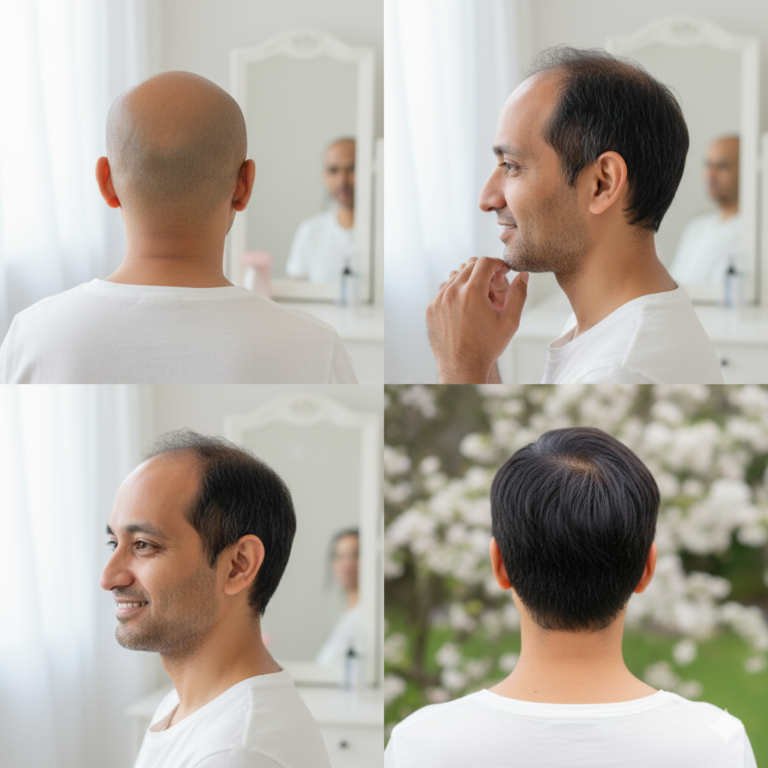
A hair transplant is a surgical procedure where healthy hair follicles are taken from a donor area (usually the back or sides of the scalp) and implanted into bald or thinning areas.
- Donor hair is DHT-resistant
- Transplanted hair usually lasts a lifetime
- Works best for genetic hair loss
10.2 Who Is a Good Candidate?
You are a good candidate if:
- You have male or female pattern baldness
- You have a stable donor area
- Hair loss is not rapidly progressing
- You are over 23–25 years old (recommended)
Not ideal if:
- Donor area is very weak
- Active autoimmune hair loss (alopecia areata)
- Unrealistic expectations
10.3 Pre-Transplant Stage (Before Surgery)
10.3.1 Doctor Consultation
- Scalp examination
- Hair density measurement
- Donor area analysis
- Hairline design (very important)
10.3.2 Medical Tests
- Blood tests
- Diabetes check
- Blood pressure check
- Infection screening
10.3.3 Pre-Surgery Instructions
- Stop smoking (7–10 days before)
- Stop alcohol (5–7 days before)
- Avoid blood thinners (doctor advice)
- Stop minoxidil 5–7 days before
10.4 Types of Hair Transplant Methods
10.4.1 FUE (Follicular Unit Extraction)
- Individual follicles extracted
- No linear scar
- Faster healing
- Most popular method
10.4.2 FUT (Strip Method)
- Strip of skin removed
- Linear scar
- Higher graft yield
- Less commonly used now
10.4.3 DHI (Direct Hair Implantation)
- Modified FUE technique
- Uses Choi pen
- More precise placement
- Higher cost
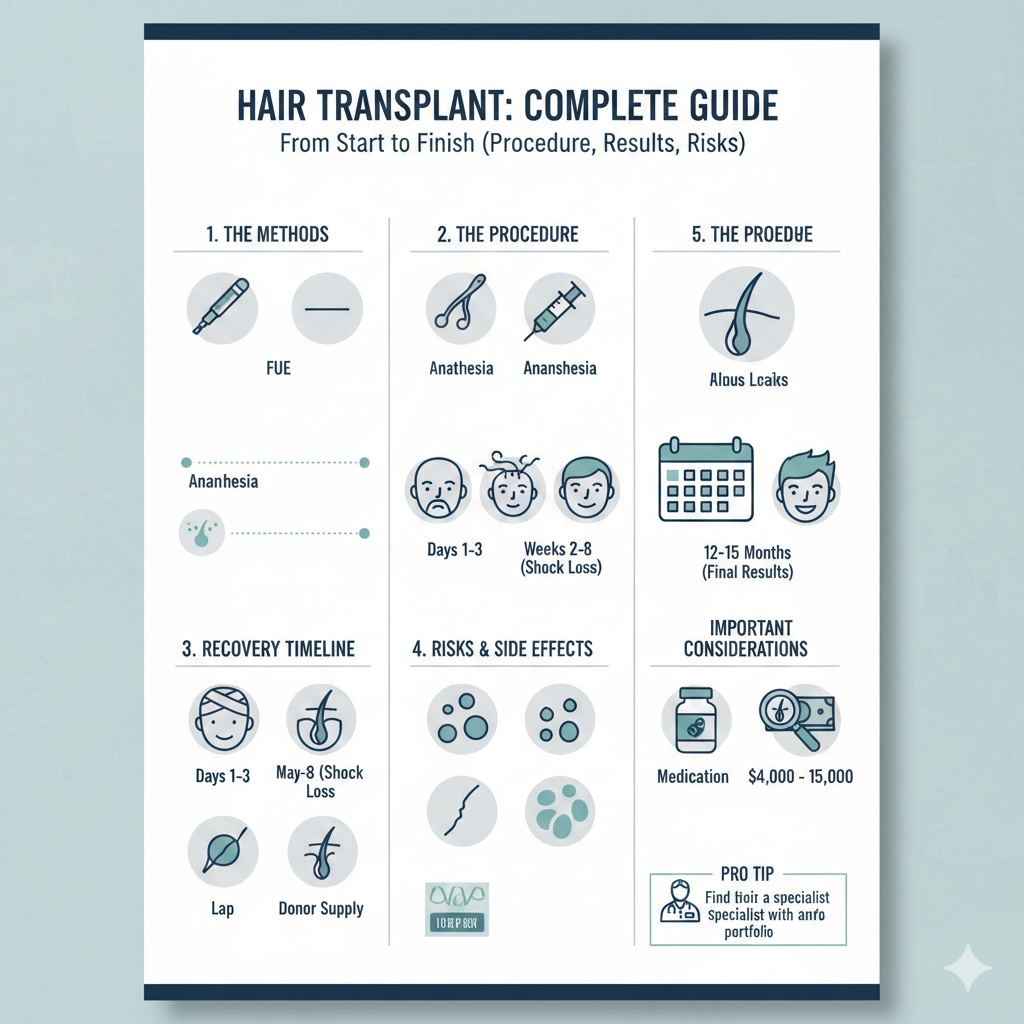
10.5 Hair Transplant Procedure (Surgery Day)
Step 1: Head Shaving
- Donor area shaved
- Sometimes recipient area also shaved
Step 2: Local Anesthesia
- No general anesthesia
- Patient remains awake
- Pain is minimal after numbness
Step 3: Graft Extraction
- Follicles removed one by one
- Grafts stored in special solution
Step 4: Channel Creation
- Tiny incisions made in bald area
- Angle and direction are critical
Step 5: Graft Implantation
- Grafts placed carefully
- Hairline and density designed here
⏱️ Duration: 6–10 hours depending on graft count
10.6 After Surgery: Immediate Care (First 14 Days)
First 48 Hours
- Mild swelling
- Redness
- Tight feeling on scalp
Washing Instructions
- First wash after 24–48 hours
- Use prescribed shampoo
- No rubbing or scratching
Sleeping Position
- Head elevated
- Avoid touching grafts
10.7 Shedding Phase (Shock Loss – Very Important)
- Occurs after 2–6 weeks
- Transplanted hair falls out
- Roots remain alive
⚠️ This is NORMAL and temporary
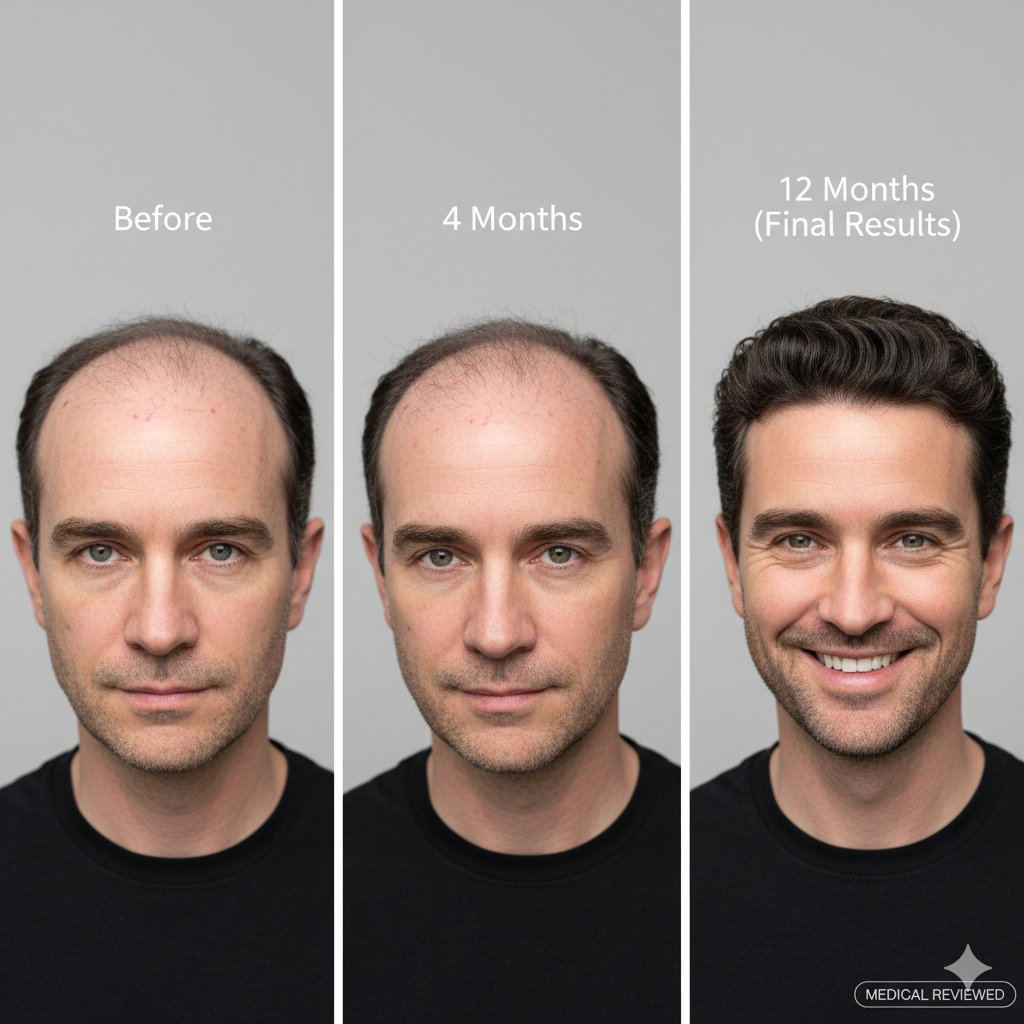
10.8 Hair Regrowth Timeline (Proof-Based)
| Time Period | What Happens |
| 1–2 months | Shedding phase |
| 3 months | New thin hair starts |
| 6 months | 50–60% visible growth |
| 9 months | Thicker hair |
| 12 months | Final results |
10.9 Medicines After Hair Transplant
Doctors may prescribe:
- Minoxidil (restart after 2–3 weeks)
- Finasteride (to protect existing hair)
- Antibiotics (short-term)
- Pain relievers
10.10 Risks and Side Effects
Possible but usually temporary:
- Swelling
- Itching
- Redness
- Infection (rare)
- Poor growth if clinic quality is low
10.11 Cost Factors (General)
Cost depends on:
- Number of grafts
- Clinic reputation
- Surgeon experience
- Country and city
⚠️ Cheap clinics often give poor density and unnatural hairlines
10.12 Important Truths About Hair Transplant
✔ Transplanted hair is permanent ✔ Existing hair can still fall ✔ Maintenance medicine is important ✔ One transplant may not be enough
10.13 Final Advice
Hair transplant is a medical procedure, not a cosmetic shortcut. Proper planning, a skilled surgeon, and realistic expectations are essential for natural-looking, long-lasting results.
Updated Final Conclusion
Healthy hair restoration needs the right method at the right time. Natural care, medicines, and hair transplant each have their place. The best results come from combining medical science with patience and professional guidance.
10. Hair Transplant: Complete Step-by-Step Guide (From Start to Finish)
Hair transplant is the most permanent medical solution for advanced hair loss. This section explains everything from the first consultation to final results, in simple but professional medical English.
10.1 What Is a Hair Transplant?
A hair transplant is a surgical procedure where healthy hair follicles are taken from a donor area (usually the back or sides of the scalp) and implanted into bald or thinning areas.
- Donor hair is DHT-resistant
- Transplanted hair usually lasts a lifetime
- Works best for genetic hair loss
10.2 Who Is a Good Candidate?
You are a good candidate if:
- You have male or female pattern baldness
- You have a stable donor area
- Hair loss is not rapidly progressing
- You are over 23–25 years old (recommended)
Not ideal if:
- Donor area is very weak
- Active autoimmune hair loss (alopecia areata)
- Unrealistic expectations
10.3 Pre-Transplant Stage (Before Surgery)
10.3.1 Doctor Consultation
- Scalp examination
- Hair density measurement
- Donor area analysis
- Hairline design (very important)
10.3.2 Medical Tests
- Blood tests
- Diabetes check
- Blood pressure check
- Infection screening
10.3.3 Pre-Surgery Instructions
- Stop smoking (7–10 days before)
- Stop alcohol (5–7 days before)
- Avoid blood thinners (doctor advice)
- Stop minoxidil 5–7 days before
10.4 Types of Hair Transplant Methods
10.4.1 FUE (Follicular Unit Extraction)
- Individual follicles extracted
- No linear scar
- Faster healing
- Most popular method
10.4.2 FUT (Strip Method)
- Strip of skin removed
- Linear scar
- Higher graft yield
- Less commonly used now
10.4.3 DHI (Direct Hair Implantation)
- Modified FUE technique
- Uses Choi pen
- More precise placement
- Higher cost
10.5 Hair Transplant Procedure (Surgery Day)
Step 1: Head Shaving
- Donor area shaved
- Sometimes recipient area also shaved
Step 2: Local Anesthesia
- No general anesthesia
- Patient remains awake
- Pain is minimal after numbness
Step 3: Graft Extraction
- Follicles removed one by one
- Grafts stored in special solution
Step 4: Channel Creation
- Tiny incisions made in bald area
- Angle and direction are critical
Step 5: Graft Implantation
- Grafts placed carefully
- Hairline and density designed here
⏱️ Duration: 6–10 hours depending on graft count
10.6 After Surgery: Immediate Care (First 14 Days)
First 48 Hours
- Mild swelling
- Redness
- Tight feeling on scalp
Washing Instructions
- First wash after 24–48 hours
- Use prescribed shampoo
- No rubbing or scratching
Sleeping Position
- Head elevated
- Avoid touching grafts
10.7 Shedding Phase (Shock Loss – Very Important)
- Occurs after 2–6 weeks
- Transplanted hair falls out
- Roots remain alive
⚠️ This is NORMAL and temporary
10.8 Hair Regrowth Timeline (Proof-Based)
| Time Period | What Happens |
|---|---|
| 1–2 months | Shedding phase |
| 3 months | New thin hair starts |
| 6 months | 50–60% visible growth |
| 9 months | Thicker hair |
| 12 months | Final results |
10.9 Medicines After Hair Transplant
Doctors may prescribe:
- Minoxidil (restart after 2–3 weeks)
- Finasteride (to protect existing hair)
- Antibiotics (short-term)
- Pain relievers
10.10 Risks and Side Effects
Possible but usually temporary:
- Swelling
- Itching
- Redness
- Infection (rare)
- Poor growth if clinic quality is low
10.11 Cost Factors (General)
Cost depends on:
- Number of grafts
- Clinic reputation
- Surgeon experience
- Country and city
⚠️ Cheap clinics often give poor density and unnatural hairlines
10.12 Important Truths About Hair Transplant
✔ Transplanted hair is permanent
✔ Existing hair can still fall
✔ Maintenance medicine is important
✔ One transplant may not be enough
10.13 Final Advice
Hair transplant is a medical procedure, not a cosmetic shortcut. Proper planning, a skilled surgeon, and realistic expectations are essential for natural-looking, long-lasting results.
Updated Final Conclusion
Healthy hair restoration needs the right method at the right time. Natural care, medicines, and hair transplant each have their place. The best results come from combining medical science with patience and professional guidance.
This article can be further expanded with FAQs, before–after case studies, country-wise cost comparisons, and SEO optimization for blog publishing.
Internal Links
Internal linking is essential for SEO, user engagement, and topical authority. Below are carefully selected internal resources from HealthGuideMe that support and strengthen this hair transplant article.
1. Health & Wellness Hub
This page acts as the main health knowledge hub of the website. Linking to it helps users explore broader health topics, improves site navigation, and signals strong internal structure to search engines.
2. Skin Lightening Practices (USA, UK & Canada)
This article covers cosmetic and dermatological practices in Western countries. Internal linking from a hair transplant article improves topical relevance in the medical + cosmetic health niche, which is valuable for E-E-A-T and AdSense trust.
This is a highly relevant supporting article that explains the causes of hair fall, prevention methods, and early treatments. Linking this page helps readers understand why hair transplant becomes necessary and strengthens keyword relationships between hair fall, hair loss treatment, and hair transplant.
External Resources (DoFollow Links)
Linking to authoritative external websites improves SEO trust, E-E-A-T signals, and content credibility. The following DoFollow external resources are highly relevant to hair transplant and medical hair loss treatment.
This article covers cosmetic and dermatological practices in Western countries. Internal linking from a hair transplant article improves topical relevance in the medical + cosmetic health niche, which is valuable for E-E-A-T and AdSense trust.
3. Hair Fall Complete Guide
This is a highly relevant supporting article that explains the causes of hair fall, prevention methods, and early treatments. Linking this page helps readers understand why hair transplant becomes necessary and strengthens keyword relationships between hair fall, hair loss treatment, and hair transplant.
External Resources (Medical Authority)
- American Academy of Dermatology (AAD)
https://www.aad.org
(Trusted dermatology authority for hair loss and hair transplant information) - National Health Service (NHS – UK)
https://www.nhs.uk
(Official UK medical guidance on hair loss and treatments) - Mayo Clinic
https://www.mayoclinic.org
(Globally trusted medical reference for procedures and recovery) - International Society of Hair Restoration Surgery (ISHRS)
https://ishrs.org
(Professional organization for hair transplant standards and saf
Internal Resources (HealthGuideMe)
- Health & Wellness Hub
https://healthguideme.com/
(General health information and guides) - Hair Fall Complete Guide
https://healthguideme.com/hair-fall-complete-guide-to-prevent-hair-loss-and-promote-healthy-hair-growth/
(Explains causes of hair loss and prevention before transplant) - Skin Lightening Practices (USA, UK & Canada)
https://healthguideme.com/skin-lightening-practices-usa-uk-canada/