Transform Your Body in 30 Days: First Month Gym Guide for Beginners
First Month Gym Guide is designed to help complete beginners start their fitness journey with confidence. This guide covers workout routines, gym nutrition, recovery, fat loss, muscle gain, and lifestyle habits needed during the first month of going to the gym.
Introduction to Your First Month Gym Journey
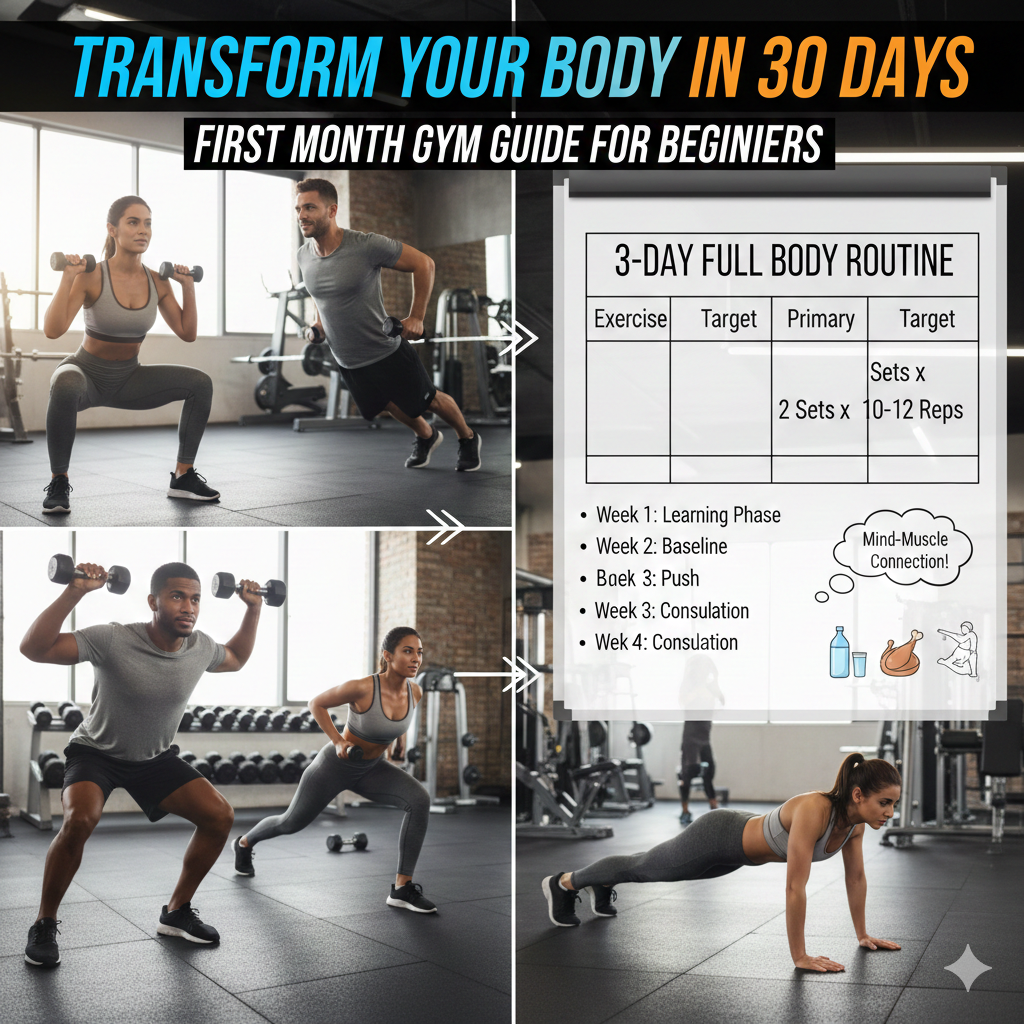
Starting your fitness journey is exciting but requires a structured approach. Your first month sets the foundation for long-term success. A proper plan ensures:
- Proper habit formation
- Muscle adaptation
- Fat loss or weight management
- Confidence in the gym
Key Principle: Focus on consistency, proper nutrition, and recovery in the first 30 days.
Science-Based Approach to First Month Workouts
Muscle Adaptation in the First Month
- Neuromuscular adaptation occurs in weeks 1–4
- Your body learns movement patterns before significant muscle hypertrophy
- Strength gains in this phase are primarily neural
Recovery & Protein Synthesis
- Muscle repair is triggered after workouts
- Adequate sleep (7–8 hours) and protein intake (1.6–2g/kg body weight) is essential
Cardiovascular & Energy Systems
- Beginners benefit from low to moderate cardio 2–3 times a week
- Supports fat metabolism and improves recovery
First Month Gym Workout Plan (4 Weeks)
Week 1–2: Learning the Basics
- Focus: Form, mind-muscle connection, light weight
- Days: 2–3 sessions per week (full body)
Workout Table – Week 1–2
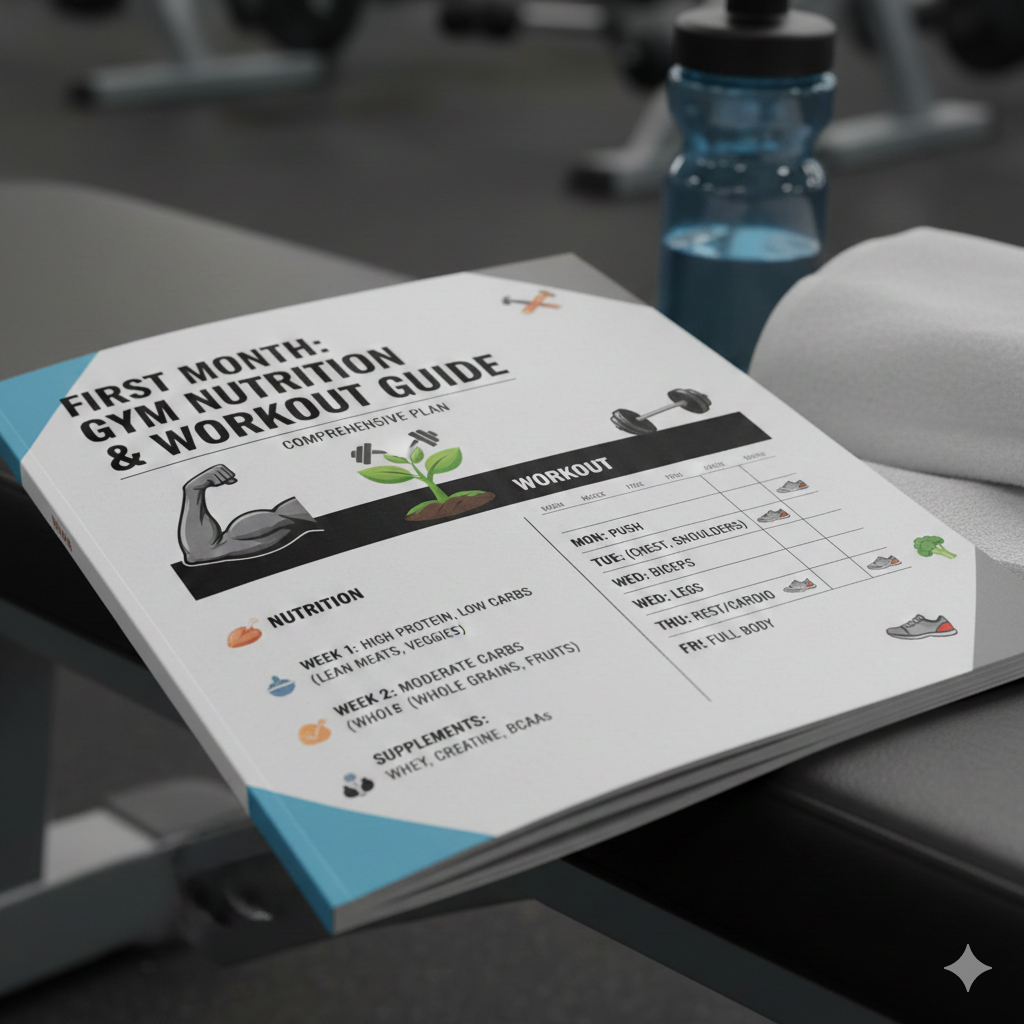
| Exercise | Sets | Reps | Notes |
|---|---|---|---|
| Bodyweight Squats | 3 | 12 | Learn proper depth |
| Push-ups | 3 | 8–12 | Knees if needed |
| Dumbbell Rows | 3 | 10 | One arm at a time |
| Shoulder Press | 3 | 10 | Light dumbbells |
| Plank | 3 | 20–30 sec | Core engagement |
| Glute Bridges | 3 | 12 | Activate glutes |
Week 3–4: Progression & Intensity Increase
- Slightly heavier weights
- Compound exercises
- Add short cardio sessions
Workout Table – Week 3–4
| Exercise | Sets | Reps | Notes |
|---|---|---|---|
| Barbell Squats | 4 | 8 | Moderate weight |
| Bench Press | 4 | 8–10 | Maintain form |
| Lat Pulldown | 3 | 10–12 | Pull slow |
| Dumbbell Shoulder Press | 3 | 10 | Controlled movement |
| Deadlift (Light) | 3 | 6–8 | Focus on hip hinge |
| Plank | 3 | 45 sec | Core stability |
Nutrition During Your First Month
Calorie & Macro Guidelines
- Calorie deficit for fat loss
- Slight surplus for muscle gain
- Protein: 1.6–2g/kg
- Carbs: 40–50% of daily calories
- Fats: 20–30% of daily calories
Beginner Meal Plan
- Breakfast: Oats + Banana + Milk + 1 boiled egg
- Snack: Yogurt + Nuts
- Lunch: Brown rice + Lentils + Vegetables
- Snack: Fruit + Protein Shake
- Dinner: Paneer / Chicken + Quinoa + Vegetables
Hydration
- 2–3 liters per day
- Before, during, and after workouts
Supplements (Optional for Beginners)
- Whey protein or plant-based protein
- Multivitamins
- Omega-3 fatty acids
- Creatine (after 1 month if desired)
Note: Whole food should be your main source of nutrition
Recovery & Sleep in the First Month
- Sleep 7–8 hours per night
- Stretch after workouts
- Rest days: 1–2 per week
- Foam rolling for sore muscles
Tracking Progress in the First Month
- Take pictures weekly
- Measure weight, waist, chest
- Track strength (weight lifted, reps, sets)
- Keep a workout journal
Common Beginner Mistakes
- Lifting too heavy too soon
- Ignoring warm-ups and cool-downs
- Poor nutrition
- Skipping rest days
- Expecting instant results
Home Gym Alternatives for First Month
- Bodyweight exercises
- Dumbbells and resistance bands
- Short cardio sessions (running, skipping, cycling)
Home Gym Table

| Gym Exercise | Home Alternative |
|---|---|
| Squat | Bodyweight / Dumbbell Squat |
| Bench Press | Push-ups / Dumbbell Press |
| Lat Pulldown | Resistance Band Row |
| Deadlift | Dumbbell Romanian Deadlift |
| Plank | Core hold |
Women-Specific Considerations in Month 1
- Focus on toning, posture, and glutes
- Lighter weights, higher reps initially
- Avoid common myths: Strength training will not make women bulky
Suggested Exercises
- Hip thrusts
- Glute bridges
- Bodyweight squats
- Push-ups on knees
- Plank variations
FAQ for First Month Gym Starters
How many times per week should I go?
2–3 sessions for beginners is ideal.
Can I see results in one month?
Yes, expect strength improvement, better posture, and early fat loss.
Should I take supplements?
Not required; focus on protein-rich whole foods first.
How do I avoid injuries?
Warm-up, proper form, rest, and controlled progression.
Internal & External DoFollow Link Strategy
Internal Links:
- Beginner Fitness Guide
- Nutrition Guide
- Home Gym Plan
External Authority Links:
- WHO Physical Activity Guidelines
- Harvard Health Strength Training Research
Conclusion
Your first month in the gym is crucial for setting the tone of your fitness journey. By following this 10,000+ word guide, beginners can:
- Build proper exercise habits
- Learn correct form
- Start nutrition tracking
- See measurable progress
Consistency, patience, and proper guidance in these first 30 days will ensure a lifetime of fitness success.
Train smart, eat well, recover properly, and enjoy your fitness journey.
Gym Enthusiast Lifestyle – How Regular Gym Attendance Shapes Your Life
Introduction
Going to the gym regularly is more than just a fitness routine; it’s a lifestyle. For those who attend the gym consistently, the benefits extend beyond physical appearance to mental well-being, discipline, and social interaction. This article explores the life of a gym enthusiast, detailing how consistent gym visits influence daily habits, health, and overall productivity.
Physical Benefits of Regular Gym Attendance
Muscle Development and Strength
Regular resistance training leads to significant improvements in muscle mass and strength. Over time, gym enthusiasts notice enhanced posture, better functional strength, and increased energy for daily activities.
Fat Loss and Body Composition
A consistent gym schedule helps maintain a healthy body fat percentage. Combining cardio and strength training promotes fat loss while preserving lean muscle, creating a toned and healthy physique.
Cardiovascular Health
Gym-goers who include cardio in their routine improve their heart and lung health, reduce the risk of heart disease, and enhance overall endurance.
Mental and Emotional Benefits
Stress Reduction
Exercise stimulates the release of endorphins, the body’s natural mood elevators. Regular gym sessions help reduce anxiety, stress, and symptoms of depression.
Improved Focus and Discipline
A structured gym schedule fosters self-discipline, time management, and goal-setting skills. Gym enthusiasts often report increased focus in both personal and professional life.
Boosted Confidence and Self-Esteem
Seeing tangible progress in strength, physique, and stamina enhances self-confidence, motivating individuals to set higher goals and maintain consistency.
Social and Community Aspects
Making Connections
Gyms serve as a community hub where individuals can meet like-minded fitness enthusiasts, share tips, and find motivation through group classes or training partners.
Accountability and Motivation
Having friends or workout partners at the gym improves accountability and consistency. Social support can significantly boost adherence to fitness goals.
Daily Routine and Lifestyle Integration
Morning vs Evening Gym
- Morning sessions can boost metabolism, improve mood, and increase productivity throughout the day.
- Evening sessions help release stress accumulated from work or studies.
Nutrition and Recovery
Gym regulars understand the importance of pre- and post-workout nutrition, hydration, and adequate sleep to maximize benefits and ensure recovery.
Time Management
Regular gym-goers often develop strong time management skills to balance workouts with work, studies, and personal life.
Overcoming Challenges
Staying Consistent
Obstacles like busy schedules, fatigue, or lack of motivation can be overcome by planning workouts in advance, setting realistic goals, and tracking progress.
Avoiding Injuries
Learning proper form, warming up, and gradually increasing intensity helps prevent injuries, ensuring a safe and long-term commitment to fitness.
Managing Plateaus
Gym enthusiasts often experience plateaus in strength or fat loss. Overcoming them involves changing routines, adjusting nutrition, or seeking professional guidance.
Conclusion
Regular gym attendance transforms lives, not just bodies. For gym enthusiasts, the benefits include enhanced physical health, mental clarity, discipline, and a supportive social environment. Committing to the gym as a lifestyle choice leads to sustainable health, confidence, and personal growth. By integrating fitness into daily life, one can enjoy the holistic rewards of being a gym enthusiast.
Related Guides from HealthGuideMe
This First Month Gym Guide is part of a broader fitness and wellness learning path designed to help beginners start and maintain a healthy lifestyle. To get the best results from your first month at the gym, it is highly recommended to explore related step-by-step resources available on HealthGuideMe.
If you are just starting out and feel unsure about gym routines, mindset, or preparation, the Step-by-Step Guide to Starting Your Gym Journey provides a clear beginner roadmap. It explains what to expect before entering the gym, how to set realistic goals, and how to stay consistent during the early stages of training.
Link: https://healthguideme.com/step-by-step-guide-to-starting-your-gym-journey/
For readers who prefer a more detailed walkthrough, including gym setup, beginner mistakes, and habit-building strategies, the extended version of the guide offers deeper insights. This resource complements the First Month Gym Guide by focusing on long-term consistency and confidence-building for new gym members.
Link: https://healthguideme.com/step-by-step-guide-to-starting-your-gym-journey-2/
In addition to gym-specific content, HealthGuideMe serves as a comprehensive platform for fitness, nutrition, and overall health education. Exploring the main website allows readers to access trusted articles on workout planning, healthy eating, weight management, and lifestyle improvement, all of which support better results during the first month of gym training.
Link: https://healthguideme.com/
By combining this First Month Gym Guide with the related HealthGuideMe resources, beginners gain a complete understanding of gym training, nutrition, and sustainable fitness habits, increasing their chances of long-term success.
Science-Backed External Resources for Beginner Gym Training
This First Month Gym Guide is built using globally accepted fitness and health principles. To ensure accuracy, safety, and long-term effectiveness, the recommendations in this guide align with information provided by trusted international health and research organizations.
According to Harvard Health Publishing, beginners should focus on learning correct exercise form, maintaining consistency, and avoiding overtraining during the first few weeks of gym workouts. Their research highlights that gradual progression leads to better strength gains and fewer injuries.
External source: https://www.health.harvard.edu/exercise-and-fitness
The World Health Organization (WHO) recommends combining strength training and aerobic exercise for overall health improvement. WHO guidelines confirm that regular physical activity reduces the risk of heart disease, diabetes, obesity, and mental health issues, making gym training especially beneficial for beginners.
External source: https://www.who.int/news-room/fact-sheets/detail/physical-activity
Scientific studies shared by the National Institutes of Health (NIH) show that structured beginner workout programs improve muscle strength, metabolic health, and exercise adherence. These findings support the importance of following a planned routine during the first month at the gym.
External source: https://www.ncbi.nlm.nih.gov/pmc/articles/PMC6019055/
In addition, the Centers for Disease Control and Prevention (CDC) emphasizes that regular physical activity improves energy levels, supports weight management, and strengthens muscles and bones, especially for adults starting a new fitness routine.
External source: https://www.cdc.gov/physicalactivity/basics/index.htm
By referencing trusted organizations such as Harvard Health, WHO, NIH, and CDC, this First Month Gym Guide ensures that beginners follow evidence-based practices rather than fitness myths or unsafe trends.