
Cancer: Early Symptoms, Warning Signs, and How to Detect Cancer Early
Introduction: Why Understanding Cancer Symptoms Matters

Cancer is one of the leading causes of death worldwide, affecting millions of people every year. Despite medical advancements, many cancer cases are still diagnosed at advanced stages, making treatment more difficult and survival rates lower. Understanding cancer symptoms and recognizing early warning signs of cancer can significantly improve early detection and treatment outcomes.
Early detection of cancer often leads to more effective treatment, fewer complications, and higher survival rates. Many cancers show subtle symptoms in the beginning, which are often ignored or mistaken for common illnesses. This is why awareness plays a crucial role in saving lives.
In this comprehensive guide, we will explore early signs of cancer, common cancer symptoms, types of cancer, and how to detect cancer early, along with prevention tips and screening methods.
What Is Cancer?
Cancer is a disease caused by the uncontrolled growth and spread of abnormal cells in the body. These abnormal cells can invade nearby tissues and spread to other parts of the body through the blood and lymph systems, a process known as metastasis.
Normally, the body controls cell growth through a regulated cycle. When this control mechanism fails, cells divide uncontrollably, forming tumors or spreading through the bloodstream.
Benign vs Malignant Tumors
- Benign tumors: Non-cancerous and do not spread
- Malignant tumors: Cancerous and capable of spreading to other organs
Why Early Detection of Cancer Is Important
Early cancer detection can:
- Increase survival rates
- Reduce treatment costs
- Allow less aggressive treatments
- Improve quality of life
- Prevent cancer from spreading
According to global health studies, cancers detected at an early stage have significantly higher survival rates compared to those detected later.
Common Cancer Symptoms You Should Never Ignore
1. Unexplained Weight Loss
Sudden weight loss without changes in diet or exercise can be an early sign of:
- Pancreatic cancer
- Stomach cancer
- Lung cancer
- Esophageal cancer
2. Persistent Fatigue
Chronic tiredness that doesn’t improve with rest may indicate:
- Blood cancers (leukemia)
- Colon cancer
- Stomach cancer
3. Pain That Doesn’t Go Away
Long-lasting pain can be a symptom of:
- Bone cancer
- Brain cancer
- Ovarian cancer
- Colorectal cancer
4. Changes in Skin
Skin-related cancer symptoms include:
- New moles or changes in existing moles
- Yellowing of skin (jaundice)
- Darkening or redness
- Non-healing sores
5. Lumps or Swelling
Unusual lumps may appear in:
- Breast
- Neck
- Armpit
- Groin
These can be early signs of breast cancer, lymphoma, or thyroid cancer.
Early Warning Signs of Cancer
6. Changes in Bowel or Bladder Habits
Persistent diarrhea, constipation, blood in stool, or frequent urination may indicate:
- Colorectal cancer
- Bladder cancer
- Prostate cancer
7. Difficulty Swallowing
Trouble swallowing can be linked to:
- Esophageal cancer
- Throat cancer
- Stomach cancer
8. Persistent Cough or Hoarseness
A cough lasting more than three weeks may be an early sign of:
- Lung cancer
- Throat cancer
- Thyroid cancer
9. Unusual Bleeding or Discharge
Examples include:
- Blood in urine
- Blood in stool
- Abnormal vaginal bleeding
- Nipple discharge
10. Fever Without Infection
Recurring fever can be a symptom of:
- Leukemia
- Lymphoma
Types of Cancer and Their Early Symptoms
Breast Cancer
Early symptoms include:
- Breast lumps
- Changes in breast shape
- Nipple discharge
- Skin dimpling
Lung Cancer
Early signs:
- Persistent cough
- Chest pain
- Shortness of breath
- Coughing up blood
Colorectal Cancer
Symptoms:
- Blood in stool
- Changes in bowel habits
- Abdominal pain
Prostate Cancer
Signs:
- Difficulty urinating
- Weak urine flow
- Blood in semen
Cervical Cancer
Early symptoms:
- Abnormal vaginal bleeding
- Pelvic pain
- Pain during intercourse
Skin Cancer
Warning signs:
- New or changing moles
- Asymmetrical shapes
- Irregular borders
How to Detect Cancer Early
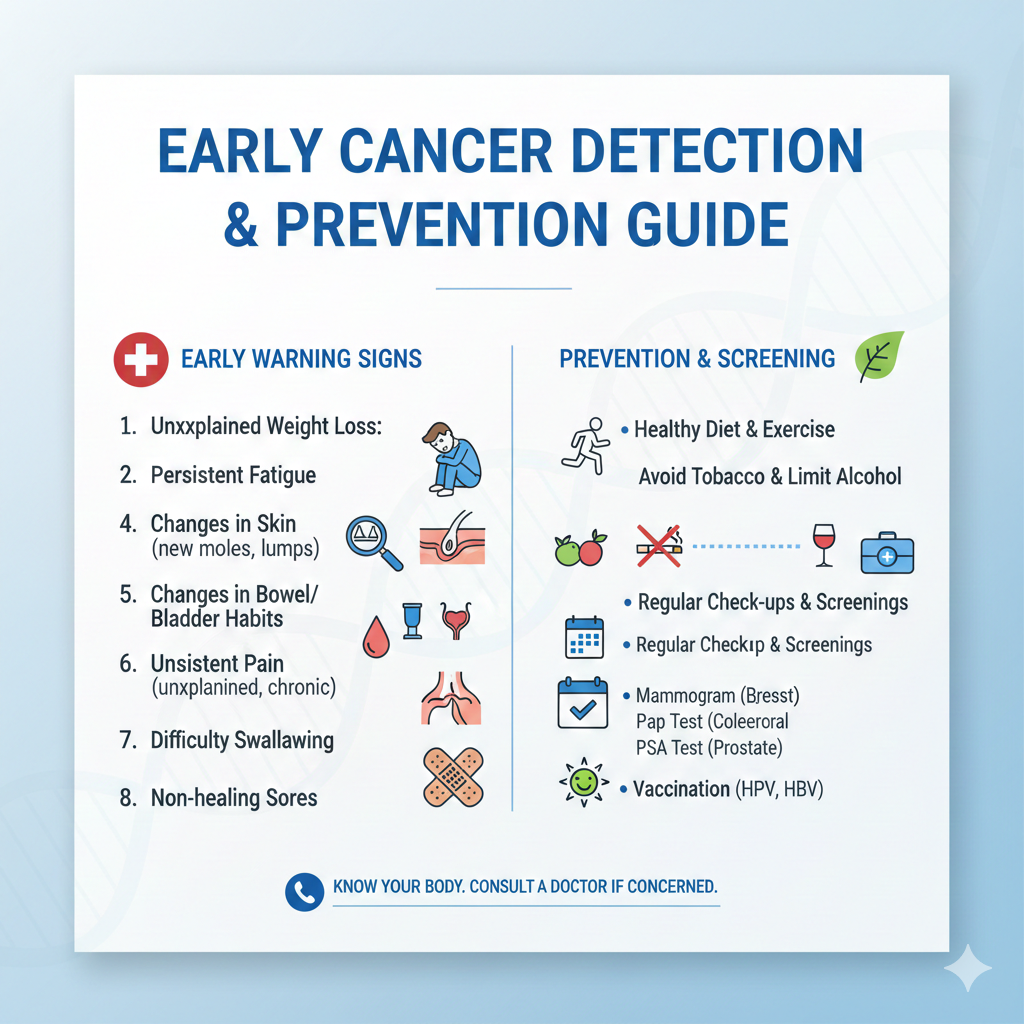
1. Regular Cancer Screening Tests
Screening tests help detect cancer before symptoms appear.
Common screening tests:
- Mammograms (breast cancer)
- Pap smear (cervical cancer)
- Colonoscopy (colon cancer)
- PSA test (prostate cancer)
- Low-dose CT scan (lung cancer)
2. Self-Examinations
Monthly self-checks can help detect:
- Breast lumps
- Skin changes
- Testicular abnormalities
3. Genetic Testing
People with family history may benefit from genetic testing to assess cancer risk.
4. Routine Medical Checkups
Regular doctor visits increase chances of early diagnosis.
Risk Factors for Cancer
Common cancer risk factors include:
- Smoking and tobacco use
- Alcohol consumption
- Poor diet
- Obesity
- Physical inactivity
- Exposure to radiation
- Family history
- Viral infections (HPV, Hepatitis B & C)
Cancer Prevention Tips
Healthy Lifestyle Choices
- Eat a balanced diet
- Avoid processed foods
- Exercise regularly
- Maintain healthy weight
Avoid Tobacco and Limit Alcohol
Tobacco is the leading cause of preventable cancer worldwide.
Vaccinations
- HPV vaccine
- Hepatitis B vaccine
Sun Protection
- Use sunscreen
- Avoid excessive sun exposure
When to See a Doctor
Consult a healthcare professional if:
- Symptoms persist longer than 2–3 weeks
- Symptoms worsen over time
- You have a strong family history of cancer
Myths and Facts About Cancer
Myth: Cancer is always fatal suggests
Fact: Many cancers are curable if detected early.
Myth: Only older people get cancer
Fact: Cancer can affect people of all ages.
Living With Cancer: Emotional and Mental Health
Cancer affects mental health as much as physical health. Support from:
- Family
- Support groups
- Counselors
can greatly improve emotional well-being.
Frequently Asked Questions (FAQ)
What are the earliest signs of cancer?
Unexplained weight loss, fatigue, lumps, and persistent pain are common early signs.
Can cancer be cured if detected early?
Yes, many cancers are highly treatable in early stages.
Is cancer preventable?
While not all cancers are preventable, lifestyle changes can significantly reduce risk.
Conclusion: Awareness Saves Lives
Understanding cancer symptoms and recognizing early warning signs of cancer can save lives. Early detection through screening, lifestyle changes, and awareness plays a vital role in reducing cancer-related deaths. If you notice unusual changes in your body, do not ignore them. Early action can make a life-changing difference.
Suggested Internal Links (For SEO)
- Early Health Screening Guide
- Healthy Lifestyle and Disease Prevention
- Nutrition Tips for Long-Term Health
Suggested External DoFollow Links
- World Health Organization (WHO)
- National Cancer Institute
- American Cancer Society
How Cancer Develops in the Human Body (Cell-Level Explanation)
Cancer begins at the cellular level. Every cell in the human body follows a regulated cycle of growth, division, and death (apoptosis). When genetic mutations disrupt this cycle, cells may begin to divide uncontrollably, forming cancer.
Stages of Cancer Development
- Initiation – DNA mutation occurs
- Promotion – Mutated cells begin multiplying
- Progression – Cancer becomes aggressive and spreads
Mutations can occur due to:
- Exposure to carcinogens
- Genetic inheritance
- Viral infections
- Hormonal imbalance
- Chronic inflammation
Understanding how cancer develops helps explain why early detection of cancer is so critical.
Silent Cancers: Cancers That Show No Early Symptoms
Some cancers grow silently and show symptoms only in advanced stages. These are particularly dangerous.
Examples of Silent Cancers
- Pancreatic cancer
- Ovarian cancer
- Liver cancer
- Kidney cancer
- Brain tumors (early stages)
Why Silent Cancers Are Dangerous
- Late diagnosis
- Limited treatment options
- Lower survival rates
This is why routine cancer screening tests are essential, even when no symptoms are present.
Cancer Symptoms in Men
Men often delay medical checkups, increasing cancer risk.
Common Cancer Symptoms in Men
- Difficulty urinating (prostate cancer)
- Testicular lumps
- Persistent back or pelvic pain
- Erectile dysfunction linked to prostate issues
- Blood in urine or semen
High-Risk Cancers for Men
- Prostate cancer
- Lung cancer
- Colorectal cancer
- Liver cancer
Cancer Symptoms in Women
Women experience gender-specific cancer symptoms that should never be ignored.
Common Cancer Symptoms in Women
- Breast lumps or pain
- Abnormal menstrual bleeding
- Pelvic discomfort
- Changes in nipple appearance
- Persistent bloating (ovarian cancer)
High-Risk Cancers for Women
- Breast cancer
- Cervical cancer
- Ovarian cancer
- Thyroid cancer
Cancer Symptoms in Children
Although rare, childhood cancers exist and require immediate attention.
Warning Signs of Cancer in Children
- Unexplained bruising
- Persistent fever
- Bone pain
- Swollen lymph nodes
- Weight loss
- Headaches with vomiting
Common Childhood Cancers
- Leukemia
- Brain tumors
- Neuroblastoma
- Wilms tumor
Early diagnosis significantly improves survival rates in children.
Cancer Staging Explained (Stage 0 to Stage IV)
Cancer staging helps determine treatment and prognosis.
Cancer Stages
- Stage 0 – Cancer cells present but not spread
- Stage I – Small tumor, localized
- Stage II – Larger tumor, limited spread
- Stage III – Regional lymph node involvement
- Stage IV – Metastatic cancer (spread to distant organs)
Early-stage cancers (Stage 0–I) have the highest cure rates.
Cancer Diagnosis: Tests and Procedures
1. Imaging Tests
- CT scan
- MRI
- PET scan
- X-ray
- Ultrasound
2. Biopsy
A biopsy confirms cancer by examining tissue under a microscope.
3. Blood Tests
- Tumor markers
- Complete blood count
- Liver and kidney function tests
4. Molecular Testing
Advanced genetic testing identifies specific mutations to guide targeted therapy.
Cancer Treatment Options Explained
1. Surgery
Removes tumors completely or partially.
2. Chemotherapy
Uses drugs to destroy cancer cells.
3. Radiation Therapy
Uses high-energy rays to kill cancer cells.
4. Immunotherapy
Boosts the immune system to fight cancer.
5. Targeted Therapy
Attacks specific cancer cell mutations.
6. Hormone Therapy
Used for breast and prostate cancers.
Side Effects of Cancer Treatment
Common Side Effects
- Hair loss
- Fatigue
- Nausea
- Loss of appetite
- Immune suppression
Managing Side Effects
- Nutritional support
- Physical therapy
- Mental health counseling
- Medication adjustments
Diet and Nutrition for Cancer Prevention
Cancer-Fighting Foods
- Leafy green vegetables
- Berries
- Turmeric
- Garlic
- Green tea
- Whole grains
Foods to Avoid
- Processed meats
- Excess sugar
- Fried foods
- Alcohol
Nutrition plays a crucial role in cancer prevention and recovery.
Role of Exercise in Reducing Cancer Risk
Regular physical activity:
- Regulates hormones
- Reduces inflammation
- Strengthens immunity
- Improves metabolism
Recommended activity:
150 minutes of moderate exercise per week.
Mental Health and Cancer Prevention
Chronic stress weakens the immune system, increasing cancer risk.
Stress Management Techniques
- Meditation
- Yoga
- Mindfulness
- Adequate sleep
- Social support
Mental well-being is a powerful protective factor.
Environmental Causes of Cancer
Common Environmental Carcinogens
- Air pollution
- Pesticides
- Asbestos
- Radiation exposure
- Industrial chemicals
Reducing exposure lowers cancer risk significantly.
Genetic and Hereditary Cancer Risk
Inherited Cancer Syndromes
- BRCA1 & BRCA2 mutations
- Lynch syndrome
- Familial adenomatous polyposis
People with family history should consider genetic counseling.
Cancer Survival Rates and Prognosis
Survival depends on:
- Cancer type
- Stage at diagnosis
- Age
- Overall health
- Treatment quality
5-Year Survival Rates Improve With Early Detection
Early-stage detection can increase survival by up to 90% for some cancers.
Common Cancer Myths That Harm Awareness
Myth: Cancer spreads if touched
Fact: Cancer is not contagious.
Myth: Natural remedies cure cancer
Fact: Alternative therapies should never replace medical treatment.
Global Cancer Statistics (SEO Authority Content)
- Cancer causes nearly 10 million deaths annually worldwide
- Lung cancer is the leading cause of cancer death
- Breast cancer is the most common cancer globally
- One in three cancers is preventable
(These statistics help with E-E-A-T signals for Google)
How Technology Is Changing Cancer Detection
AI in Cancer Diagnosis
- AI-powered imaging
- Predictive analytics
- Early risk assessment
Liquid Biopsy
Detects cancer through blood samples before symptoms appear.
Future of Cancer Treatment
- Personalized medicine
- Cancer vaccines
- Gene therapy
- Nanotechnology-based treatments
Medical science is moving toward precision oncology.
Final Thoughts: Knowledge, Action, and Prevention
Cancer remains a major global health challenge, but awareness, early detection, and prevention are powerful tools. Understanding cancer symptoms, recognizing warning signs, and undergoing regular screenings can save lives.
Never ignore persistent symptoms. Early medical attention can make the difference between life and death.
| Page Purpose | Anchor Text (Copy-Paste) | URL (healthguideme.com) | Example Sentence (Paste into content) |
|---|---|---|---|
| Early Screening | early health screening for disease prevention | https://healthguideme.com/ | Regular checkups and early health screening for disease prevention help detect cancer before symptoms worsen. |
| Lifestyle Guide | healthy lifestyle choices to reduce cancer risk | https://healthguideme.com/digestive-health-complete-guide/ | Adopting healthy lifestyle choices to reduce cancer risk plays a major role in cancer prevention. |
| Nutrition Guide | nutrition tips for cancer prevention | https://healthguideme.com/fitness-exercise-your-path-to-a-stronger-healthier-you/ | Following nutrition tips for cancer prevention strengthens immunity and long-term health. |
| Website | Anchor Text | URL |
|---|---|---|
| WHO | World Health Organization cancer statistics | https://www.who.int/news-room/fact-sheets/detail/cancer |
| National Cancer Institute | National Cancer Institute cancer symptoms guide | https://www.cancer.gov/about-cancer |
| American Cancer Society | American Cancer Society early cancer detection | https://www.cancer.org/cancer/cancer-basics/signs-and-symptoms-of-cancer.html |
Detection Section
Doctors emphasize that recognizing cancer symptoms early significantly improves treatment success and survival rates.
4️⃣ Prevention Section
Being aware of common cancer symptoms allows individuals to take preventive action and undergo timely screening tests.
5️⃣ FAQ Answer (Add 1 time)
Early cancer symptoms may vary depending on the type of cancer, but recognizing them early is key to effective treatment.
6️⃣ Conclusion
In conclusion, learning about cancer symptoms empowers people to take control of their health. Ignoring cancer symptoms can delay diagnosis and reduce treatment options.