Acidity vs Gas – What’s the Difference
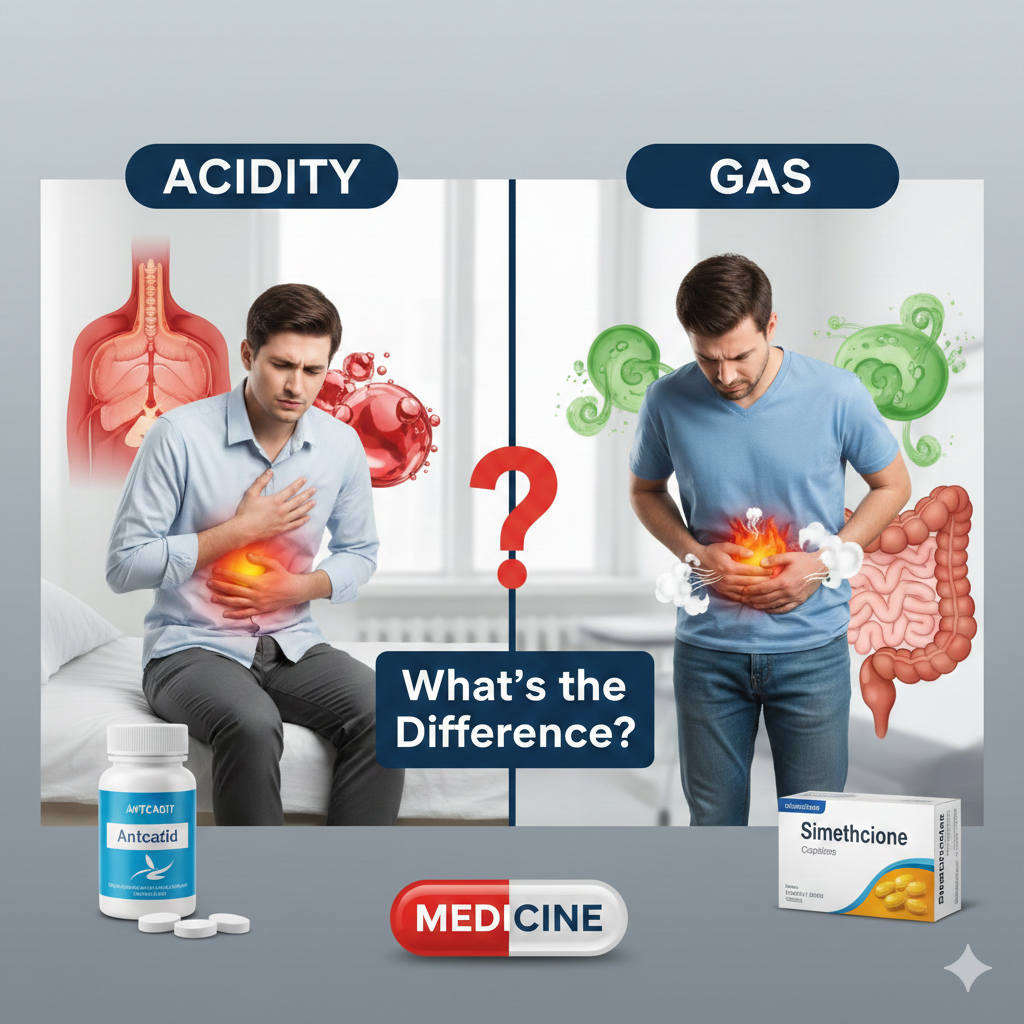
Digestive discomfort is one of the most common health complaints worldwide. Many people use the terms acidity and gas interchangeably, assuming they mean the same thing. However, acidity and gas are two different digestive conditions with distinct causes, symptoms, and treatments. Understanding the difference between acidity and gas can help you manage symptoms effectively and prevent long-term complications.
In this comprehensive guide, we will explore:
- What is acidity?
- What is gas?
- Key differences between acidity and gas
- Causes and symptoms
- Risk factors
- Treatment options
- Home remedies
- Prevention tips
- When to see a doctor
By the end of this article, you’ll clearly understand acidity vs gas – what’s the difference and how to treat each condition properly.
What Is Acidity?
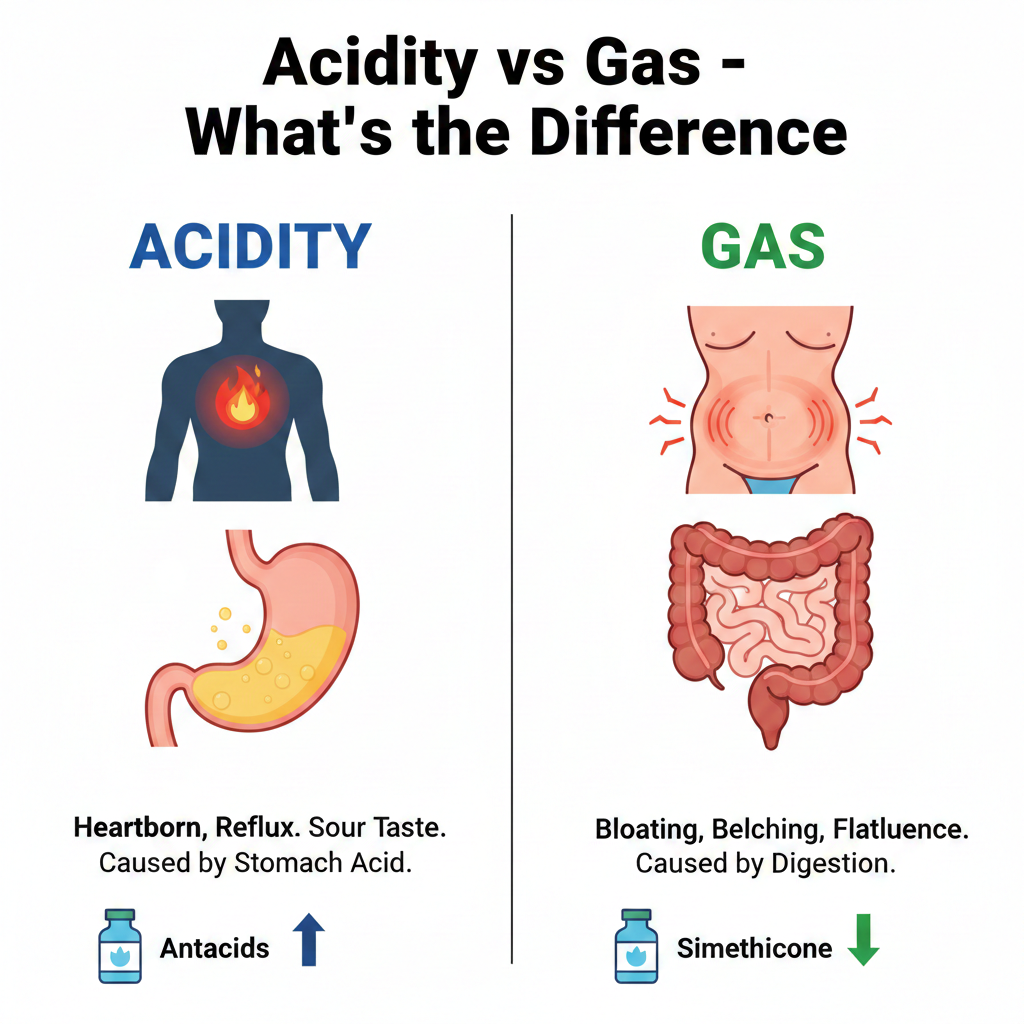
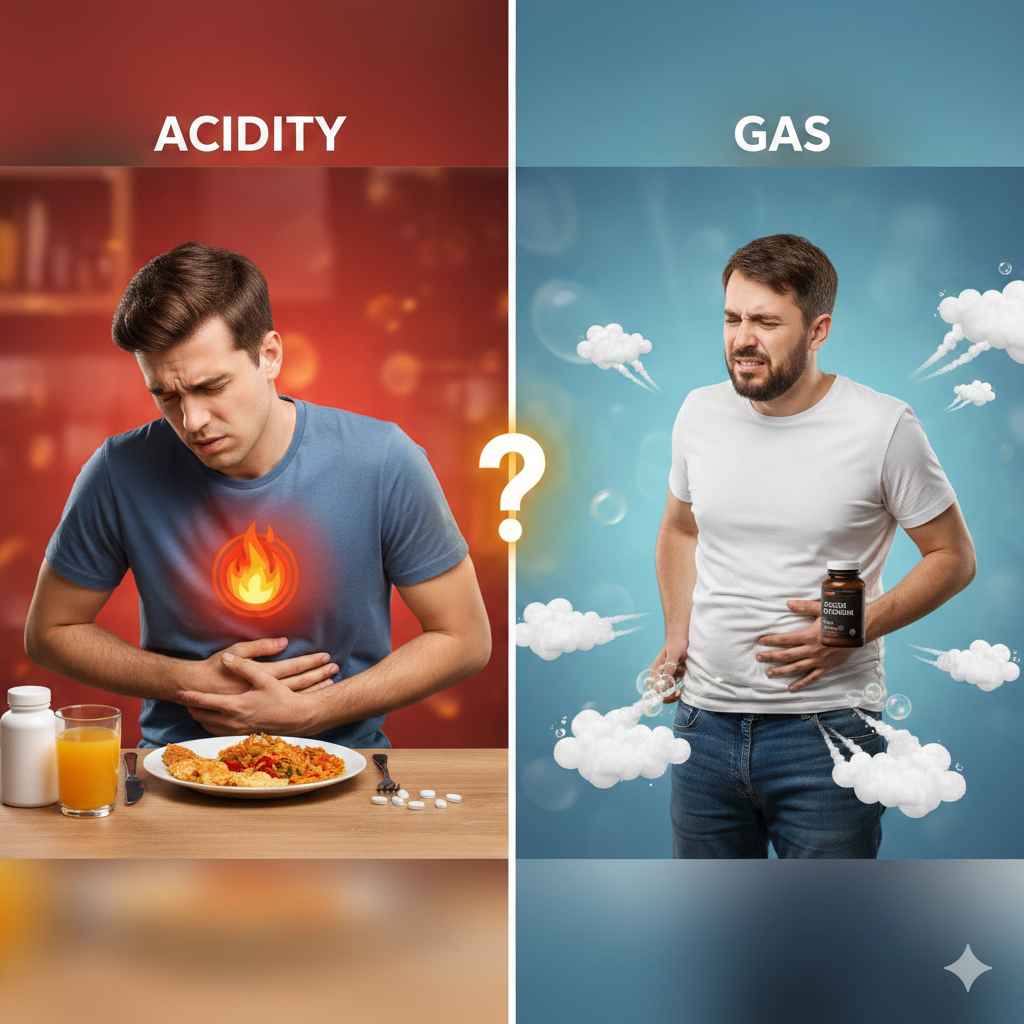
Acidity occurs when the stomach produces excessive acid, leading to irritation of the stomach lining or food pipe (esophagus). Medically, it is often associated with acid reflux or gastroesophageal reflux disease (GERD).
The stomach naturally produces hydrochloric acid to digest food. However, when acid levels increase or when the lower esophageal sphincter (LES) weakens, acid can move upward into the esophagus. This causes the classic symptom known as heartburn.
Common Symptoms of Acidity
- Burning sensation in the chest (heartburn)
- Sour or bitter taste in the mouth
- Regurgitation of food or liquid
- Nausea
- Difficulty swallowing
- Chest discomfort after meals
- Symptoms worsening when lying down
Acidity is often triggered by certain foods, stress, overeating, or lifestyle habits.
What Is Gas?
Gas refers to the buildup of air in the digestive tract. It can accumulate in the stomach or intestines due to swallowing air or bacterial fermentation of food.
Gas formation is a normal part of digestion. However, excessive gas can cause discomfort and bloating.
Common Symptoms of Gas
- Abdominal bloating
- Stomach distension
- Burping
- Passing gas (flatulence)
- Sharp or cramping abdominal pain
- Feeling of fullness
Gas pain can sometimes be mistaken for heart problems because it may cause chest discomfort.
Acidity vs Gas – Key Differences
Understanding the difference between acidity and gas is essential for proper treatment.
| Feature | Acidity | Gas |
|---|---|---|
| Main Cause | Excess stomach acid | Air or fermentation in intestines |
| Location of Pain | Chest or upper abdomen | Abdomen |
| Burning Sensation | Common | Rare |
| Bloating | Less common | Very common |
| Sour Taste | Common | No |
| Burping | Sometimes | Very common |
| Trigger Foods | Spicy, oily foods | Beans, cabbage, carbonated drinks |
Acidity primarily affects the upper digestive tract, while gas affects the lower digestive system.
Causes of Acidity
Several factors contribute to acidity:
1. Unhealthy Diet
Spicy foods, fried foods, citrus fruits, and caffeine can increase acid production.
2. Overeating
Large meals increase pressure on the stomach, causing acid reflux.
3. Stress
Stress can increase acid secretion.
4. Smoking and Alcohol
Both weaken the lower esophageal sphincter.
5. Obesity
Excess abdominal fat increases pressure on the stomach.
6. Pregnancy
Hormonal changes and pressure from the uterus can cause acidity.
Causes of Gas
Gas can develop due to:
1. Swallowing Air
Eating quickly, chewing gum, or drinking through a straw.
2. High-Fiber Foods
Beans, lentils, broccoli, cabbage, and onions.
3. Carbonated Drinks
Soda and sparkling water.
4. Food Intolerance
Lactose intolerance can cause gas.
5. Constipation
Slowed digestion increases gas buildup.
Risk Factors
Certain individuals are more prone to acidity and gas:
- People with sedentary lifestyles
- Individuals with poor eating habits
- Those under chronic stress
- Pregnant women
- Overweight individuals
Treatment for Acidity
Treatment depends on severity.
Lifestyle Changes
- Eat smaller meals
- Avoid lying down after eating
- Elevate head while sleeping
- Reduce spicy and fatty foods
- Quit smoking
Medications
- Antacids
- H2 blockers
- Proton pump inhibitors (PPIs)
Treatment for Gas
Lifestyle Adjustments
- Eat slowly
- Avoid carbonated drinks
- Exercise regularly
Medications
- Simethicone
- Activated charcoal
- Digestive enzymes
Home Remedies for Acidity
- Cold milk
- Ginger tea
- Banana
- Aloe vera juice
- Coconut water
Home Remedies for Gas
- Warm water
- Peppermint tea
- Ajwain (carom seeds)
- Fennel seeds
- Gentle walking
When to See a Doctor
Seek medical help if you experience:
- Severe chest pain
- Persistent vomiting
- Difficulty swallowing
- Blood in stool
- Unexplained weight loss
Chronic acidity may lead to GERD, ulcers, or esophageal damage.
Prevention Tips
- Maintain healthy weight
- Avoid trigger foods
- Stay active
- Manage stress
- Eat balanced meals
- Drink enough water
Frequently Asked Questions (FAQs)
1. Is acidity the same as gas?
No. Acidity involves excess stomach acid, while gas is air buildup in the digestive tract.
2. Can gas cause chest pain?
Yes, trapped gas can cause chest discomfort.
3. What foods cause acidity?
Spicy foods, citrus fruits, coffee, and fried foods.
4. How long does gas pain last?
Usually a few minutes to hours.
5. Is acidity dangerous?
Occasional acidity is harmless, but chronic acidity needs medical attention.

Final Thoughts: Acidity vs Gas – What’s the Difference?
Although acidity and gas both cause digestive discomfort, they are not the same condition. Acidity results from excess stomach acid and causes heartburn, while gas is due to air buildup in the digestive tract and causes bloating.
Understanding the difference between acidity and gas helps you choose the right treatment and avoid unnecessary worry. Maintaining a healthy diet, managing stress, and practicing good eating habits can significantly reduce both conditions.
If symptoms persist frequently, consult a healthcare professional for proper diagnosis and treatment.
Acidity vs Gas – What’s the Difference?
Digestive discomfort is extremely common, especially with modern eating habits, stress, and irregular lifestyles. Many people experience burning in the chest, stomach bloating, or abdominal pain and immediately say, “It’s gas” or “It’s acidity.” But acidity and gas are not the same condition. Although they may feel similar, their causes, symptoms, and treatments are different.
Understanding acidity vs gas – what’s the difference can help you treat the right problem and avoid unnecessary medications. This detailed guide explains everything in simple language while keeping it medically accurate and SEO-friendly.
What Is Acidity?
Acidity refers to a condition where the stomach produces excess acid, leading to irritation in the stomach or food pipe (esophagus). It is commonly linked to acid reflux and sometimes to Gastroesophageal reflux disease (GERD).
The stomach naturally produces hydrochloric acid to digest food. However, when too much acid is produced or when the lower esophageal sphincter (LES) becomes weak, acid can flow back into the esophagus. This backflow causes a burning sensation in the chest known as heartburn.
Common Symptoms of Acidity
- Burning sensation in the chest (heartburn)
- Sour or bitter taste in the mouth
- Regurgitation of food or acid
- Nausea
- Chest discomfort after eating
- Symptoms worsening when lying down
- Throat irritation
Acidity usually affects the upper digestive tract.
What Is Gas?
Gas is the buildup of air in the digestive system. Gas can accumulate in the stomach or intestines due to swallowing air or bacterial breakdown of food.
Gas formation is a normal part of digestion. However, excessive gas can cause discomfort and pain.
Common Symptoms of Gas
- Abdominal bloating
- Feeling of fullness
- Burping
- Passing gas (flatulence)
- Sharp or cramping stomach pain
- Abdominal tightness
Gas typically affects the lower digestive tract and causes more abdominal discomfort than chest burning.
Acidity vs Gas – Major Differences
Here is a clear comparison to understand the difference between acidity and gas:
| Feature | Acidity | Gas |
|---|---|---|
| Primary Cause | Excess stomach acid | Air or fermentation |
| Location of Pain | Chest / upper abdomen | Lower abdomen |
| Burning Sensation | Very common | Rare |
| Bloating | Sometimes | Very common |
| Sour Taste | Yes | No |
| Burping | Mild | Frequent |
| Trigger Foods | Spicy, oily foods | Beans, cabbage, soda |
Acidity mainly causes burning pain, while gas causes pressure and bloating.
Causes of Acidity
Several lifestyle and dietary habits contribute to acidity:
1. Spicy and Oily Foods
Fried food, chili, and fatty meals increase acid production.
2. Overeating
Large meals stretch the stomach and increase acid reflux.
3. Stress
Stress can increase acid secretion and slow digestion.
4. Smoking and Alcohol
These weaken the LES and allow acid to move upward.
5. Obesity
Extra abdominal pressure pushes acid into the esophagus.
6. Irregular Eating Patterns
Skipping meals or eating late at night can trigger acidity.
Causes of Gas
Gas can occur due to:
1. Swallowing Air
Eating quickly, chewing gum, or drinking through a straw.
2. High-Fiber Foods
Beans, lentils, cabbage, broccoli, onions.
3. Carbonated Drinks
Soda and sparkling beverages introduce air.
4. Food Intolerance
Lactose intolerance or gluten sensitivity.
5. Constipation
Slow bowel movements increase gas buildup.
Why People Confuse Acidity and Gas
The confusion happens because both conditions can cause:
- Upper abdominal discomfort
- Chest pressure
- Burping
- Indigestion
However, burning sensation = more likely acidity, while bloating and abdominal swelling = more likely gas.
Treatment for Acidity
Lifestyle Changes
- Eat smaller meals
- Avoid lying down immediately after eating
- Elevate head while sleeping
- Avoid trigger foods
- Maintain healthy weight
Medications
- Antacids (for quick relief)
- H2 blockers
- Proton pump inhibitors (PPIs)
Long-term acidity should be evaluated by a doctor to rule out GERD.
Treatment for Gas
Lifestyle Changes
- Eat slowly
- Avoid fizzy drinks
- Exercise daily
- Reduce gas-producing foods
Medications
- Simethicone
- Digestive enzymes
- Probiotics
Home Remedies for Acidity
- Cold milk
- Banana
- Coconut water
- Ginger tea
- Aloe vera juice
These may provide temporary relief but are not substitutes for medical care if symptoms are severe.
Home Remedies for Gas
- Warm water
- Fennel seeds
- Peppermint tea
- Gentle walking after meals
- Ajwain (carom seeds)
Physical movement helps trapped gas move through the intestines.
Can Acidity Cause Gas?
Yes, sometimes acidity and gas can occur together. Poor digestion, overeating, and stress can contribute to both conditions at the same time.
When to See a Doctor
Seek medical attention if you experience:
- Severe chest pain
- Persistent vomiting
- Blood in stool
- Difficulty swallowing
- Unexplained weight loss
- Frequent symptoms (more than twice a week)
Chronic acidity may lead to complications such as ulcers or esophageal damage.
Prevention Tips for Acidity and Gas
- Maintain regular meal times
- Avoid overeating
- Stay physically active
- Drink enough water
- Reduce stress through meditation or yoga
- Avoid very spicy and processed foods
Healthy lifestyle habits significantly reduce both acidity and gas.
Frequently Asked Questions (FAQ)
Is acidity more serious than gas?
Occasional acidity and gas are harmless. However, chronic acidity can lead to GERD and requires medical attention.
How long does gas pain last?
Gas pain usually lasts from a few minutes to a few hours and improves after passing gas.
Can stress cause acidity and gas?
Yes, stress affects digestion and can increase both acid production and gas formation.
Which is more painful: acidity or gas?
Acidity causes burning pain, while gas causes cramping and pressure pain. The intensity depends on the individual.
Final Conclusion: Acidity vs Gas – What’s the Difference?
Acidity and gas are common digestive issues, but they are not the same. Acidity is caused by excess stomach acid and mainly causes heartburn and chest burning. Gas is caused by air buildup in the digestive tract and mainly causes bloating and abdominal discomfort.
Knowing the difference between acidity and gas helps you choose the correct treatment and avoid unnecessary worry. Maintaining a balanced diet, reducing stress, and practicing healthy eating habits are the best ways to prevent both conditions.
If symptoms are frequent or severe, always consult a healthcare professional for proper diagnosis and treatment.
Acidity vs Gas – What’s the Difference? 7 Critical Symptoms Explained
Digestive discomfort is very common today. Many people feel chest burning or stomach bloating and immediately say it’s “gas” or “acidity.” But understanding Acidity vs Gas – What’s the Difference is very important because both conditions are different and require different treatments.
For more trusted health articles and wellness guides, you can visit 👉 https://healthguideme.com/
What Is Acidity?
Acidity happens when the stomach produces excess acid. This acid can move upward into the esophagus and cause heartburn. Frequent acidity may sometimes develop into Gastroesophageal reflux disease if not treated properly.
Common Symptoms of Acidity
- Burning sensation in the chest
- Sour taste in the mouth
- Discomfort after heavy or spicy meals
- Pain that worsens when lying down
Acidity mainly affects the upper digestive tract.
What Is Gas?
Gas forms when air accumulates in the digestive system or when bacteria break down certain foods in the intestines. Gas mainly affects the lower abdomen.
Common Symptoms of Gas
- Abdominal bloating
- Burping
- Flatulence
- Cramping stomach pain
- Feeling of fullness
Gas pain is usually sharp and comes with pressure or tightness in the stomach.
7 Critical Differences Between Acidity and Gas
- Burning sensation – More common in acidity
- Bloating – More common in gas
- Sour taste – Seen in acidity
- Abdominal pressure – Seen in gas
- Pain after spicy food – Usually acidity
- Pain after soda or beans – Usually gas
- Pain worsening when lying down – Mostly acidity
Understanding these signs helps you identify Acidity vs Gas – What’s the Difference clearly.
How Diet Influences Acidity and Gas
Food habits play a major role in both conditions. Spicy, oily, and processed foods increase acidity. Beans, cabbage, and carbonated drinks increase gas formation.
If you have a busy lifestyle and struggle with unhealthy eating patterns, check this helpful guide 👉
https://healthguideme.com/healthy-diet-plans-for-busy-people/
Following a proper diet plan can significantly reduce digestive problems.
Importance of Exercise for Digestive Health
A sedentary lifestyle slows digestion and increases the risk of bloating and acid reflux. Regular physical activity improves gut movement and reduces gas buildup.
You can start with simple routines from this guide 👉
https://healthguideme.com/exercise-routines-for-all-ages/
Even light walking for 20–30 minutes daily can reduce both acidity and gas symptoms.
Treatment Options
Treatment for Acidity
- Eat smaller meals
- Avoid lying down after eating
- Reduce spicy and fried foods
- Use antacids if needed
Treatment for Gas
- Eat slowly
- Avoid carbonated drinks
- Drink warm water
- Walk after meals
Acidity vs Gas – What’s the Difference? 7 Critical Symptoms Explained
Digestive discomfort is very common today. Many people feel chest burning or stomach bloating and immediately say it’s “gas” or “acidity.” But understanding Acidity vs Gas – What’s the Difference is very important because both conditions are different and require different treatments.
For trustworthy medical information on digestive conditions like heartburn, acid reflux, and related symptoms, you can refer to the WebMD Heartburn/GERD Resource Center ➤ https://www.webmd.com/heartburn-gerd/default.htm
What Is Acidity?
Acidity happens when the stomach produces excess acid. This acid can move upward into the esophagus and cause heartburn. Frequent acidity may sometimes develop into Gastroesophageal reflux disease if not treated properly.
For detailed scientific information and treatment guidelines on GERD and acid reflux, check the MSD Manual Consumer Version on GERD ➤ https://www.msdmanuals.com/home/digestive-disorders/esophageal-and-swallowing-disorders/gastroesophageal-reflux-disease-gerd
Common Symptoms of Acidity
- Burning sensation in the chest
- Sour taste in the mouth
- Discomfort after heavy or spicy meals
- Pain that worsens when lying down
Acidity mainly affects the upper digestive tract.
What Is Gas?
Gas forms when air accumulates in the digestive system or when bacteria break down certain foods in the intestines. Gas mainly affects the lower abdomen.
Understanding how gas forms and how it affects digestion can also be explored through broader digestive health resources like those from health organizations focused on functional gastrointestinal disorders ➤ https://www.webmd.com/heartburn-gerd/heartburn-resources
Common Symptoms of Gas
- Abdominal bloating
- Burping
- Flatulence
- Cramping stomach pain
- Feeling of fullness
How Diet Influences Acidity and Gas
Food habits play a major role in both conditions. Spicy, oily, and processed foods increase acidity. Beans, cabbage, and carbonated drinks increase gas formation.
For balanced nutrition tips that support better digestion and reduce both acidity and gas, check out trusted health information sources like WebMD’s Diet and Lifestyle advice for heartburn and digestive health ➤ https://www.webmd.com/heartburn-gerd/heartburn-resources
Treatment Options
Treatment for Acidity
- Eat smaller meals
- Avoid lying down after eating
- Reduce spicy and fried foods
- Use antacids if needed
Antacids are common over-the-counter remedies to relieve acid reflux symptoms quickly. Learn more about how antacids work from a medically reviewed overview ➤ https://en.wikipedia.org/wiki/Antacid
Final Conclusion
When comparing Acidity vs Gas – What’s the Difference, remember this:
- Acidity = excess stomach acid + chest burning
- Gas = air buildup + abdominal bloating
Both conditions are manageable with proper diet, regular exercise, and healthy habits. If symptoms are frequent or severe, consult a healthcare professional for proper diagnosis.
For more expert advice on GERD, heartburn, symptoms, treatments, and lifestyle management, visit the WebMD Heartburn/GERD guide ➤ https://www.webmd.com/heartburn-gerd/default.htm
🔥 Why These Outbound Links Help SEO
- WebMD is considered a high‑authority medical resource with extensive information on heartburn, GERD, and digestive symptoms.
- MSD Manuals provide medically reviewed content on GERD and similar conditions.
- Linking to authoritative health resources increases trust signals for search engines.