Menstrual and Period Health: Causes, Symptoms, and Natural Ways to Manage Monthly Problems
Introduction
Menstrual and period health is one of the most searched women’s health topics on Google worldwide. Every month, millions of women search for answers to questions such as period pain relief, irregular periods, missed period causes, heavy bleeding periods, and period cramps home remedies.
Despite being a natural biological process, menstruation often comes with physical discomfort, emotional changes, and hormonal fluctuations that affect daily life. Understanding menstrual health is essential for managing symptoms, maintaining hormonal balance, and improving overall well-being.
This comprehensive article explains everything you need to know about menstrual and period health, common problems, causes, symptoms, and natural ways to manage monthly cycle issues.
Understanding your menstrual cycle is about more than just tracking “that time of the month.” It is often considered a vital sign of overall health. A typical cycle lasts between 21 and 35 days, but the experience is unique to every person.
The Four Phases of Your Cycle
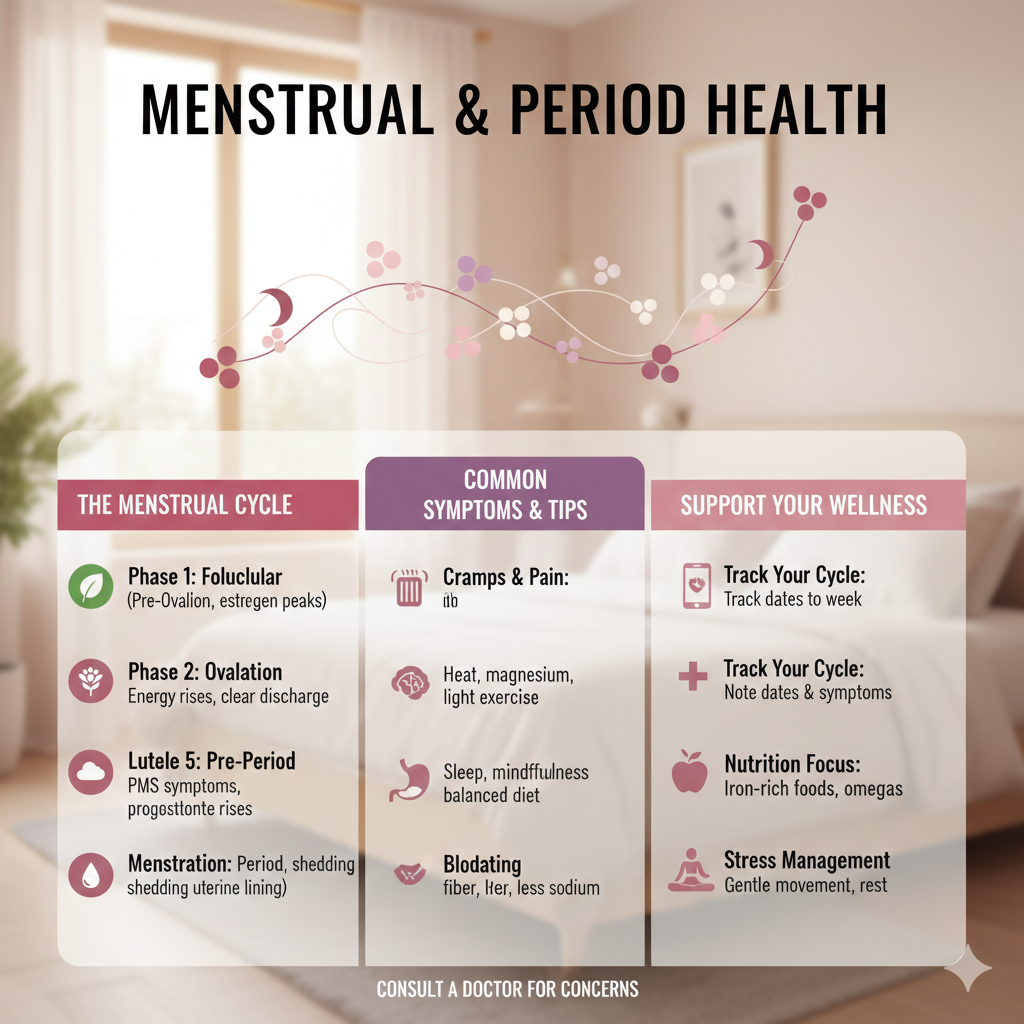
Your hormones act like a chemical internal clock, moving you through four distinct stages:
| Phase | Timing (Approx.) | What’s Happening | Common Feelings |
| Menstruation | Days 1 – 7 | The uterine lining sheds (your period). | Fatigue, cramps, low energy. |
| Follicular | Days 1 – 14 | Eggs mature; estrogen begins to rise. | Growing energy, mood boost, “glow.” |
| Ovulation | Day 14 (Mid-cycle) | An egg is released; fertility is at its peak. | High sex drive, social, mild twinges. |
| Luteal | Days 15 – 28 | Progesterone rises to prep the uterus. | PMS: Bloating, moodiness, cravings. |
Managing Period Health & Pain
You can significantly influence how you feel by adjusting your lifestyle, especially during the Luteal and Menstrual phases:
- Anti-Inflammatory Diet: Lean into leafy greens (magnesium), fatty fish (omega-3s), and bananas (potassium) to help relax uterine muscles and reduce cramping.
- The Heat Method: Using a heating pad or a warm bath improves blood flow and relaxes the muscles responsible for cramps.
- Movement Matters: Gentle exercise (like yoga or walking) releases endorphins, which act as your body’s natural painkiller.
- Limit “Triggers”: Reducing caffeine, salt, and highly processed sugars can help minimize bloating and breast tenderness.
When to See a Doctor
While some discomfort is normal, “toughing it out” shouldn’t be the default. Consult a professional if:
- You soak through a pad/tampon every 1–2 hours.
- Your period lasts longer than 8 days.
- You experience severe pain that prevents you from daily activities.
- You have irregular cycles (consistently shorter than 21 days or longer than 38).
- You notice bleeding between periods or after intercourse.
What Is Menstrual Health?
Menstrual health refers to the physical, emotional, and hormonal well-being of women during their menstrual cycle. A healthy menstrual cycle typically lasts between 21 to 35 days, with bleeding lasting 3 to 7 days.
Good period health means:
- Regular menstrual cycles
- Manageable pain levels
- Normal blood flow
- Stable mood and energy
When periods become irregular, painful, or excessively heavy, it may indicate underlying health or hormonal issues.
Understanding the Menstrual Cycle
The menstrual cycle is controlled by hormones such as estrogen, progesterone, FSH, and LH. It has four main phases:
- Menstrual Phase – bleeding occurs
- Follicular Phase – hormones prepare the body for ovulation
- Ovulation Phase – egg release
- Luteal Phase – body prepares for next cycle
Hormonal imbalances during any of these phases can lead to common menstrual problems.
Common Menstrual & Period Problems Women Search For
1. Period Pain (Dysmenorrhea)
Period pain relief is one of the most searched menstrual health queries.
Symptoms of Period Pain
- Lower abdominal cramps
- Back pain
- Thigh pain
- Headaches
- Nausea
Causes of Period Pain
- Uterine contractions
- Hormonal imbalance
- Endometriosis
- Fibroids
- Stress
Period Pain Relief – Natural Methods
- Warm compress or heating pad
- Gentle exercise or yoga
- Herbal teas (ginger, chamomile)
- Adequate hydration
- Magnesium-rich foods
Regular physical activity has been shown to reduce menstrual cramps over time.
2. Irregular Periods
Irregular periods occur when cycle length frequently changes or periods stop unexpectedly.
Common Causes of Irregular Periods
- Hormonal imbalance
- PCOS (Polycystic Ovary Syndrome)
- Stress and anxiety
- Sudden weight loss or gain
- Thyroid disorders
How to Regulate Irregular Periods Naturally
- Maintain a healthy weight
- Reduce stress through yoga or meditation
- Follow a balanced diet
- Exercise regularly
- Get adequate sleep
Persistent irregular periods should always be evaluated by a healthcare professional.
3. Missed Period Causes
A missed period does not always mean pregnancy, although it is the most common assumption.
Common Missed Period Causes
- Stress
- Hormonal imbalance
- PCOS
- Sudden lifestyle changes
- Excessive exercise
- Thyroid issues
Occasionally missing a period can be normal, but repeated missed cycles require medical attention.
4. Heavy Bleeding Periods (Menorrhagia)
Heavy bleeding periods are characterized by excessive blood loss or prolonged bleeding.
Signs of Heavy Menstrual Bleeding
- Soaking pads or tampons every 1–2 hours
- Bleeding longer than 7 days
- Passing large blood clots
- Fatigue or dizziness
Causes of Heavy Periods
- Hormonal imbalance
- Uterine fibroids
- Endometriosis
- Iron deficiency
- Certain medications
Managing Heavy Bleeding Periods
- Iron-rich diet
- Hydration
- Medical evaluation
- Hormonal regulation if necessary
Untreated heavy periods can lead to anemia and weakness.
5. Period Cramps Home Remedies
Many women prefer home remedies for period cramps instead of medications.
Effective home remedies include:
- Warm water baths
- Gentle stretching
- Herbal teas
- Light walking
- Deep breathing exercises
Lifestyle changes such as improved diet and regular exercise reduce cramps in the long term.

Hormonal Balance and Menstrual Health
Hormonal imbalance is one of the leading causes of menstrual problems.
Signs of hormonal imbalance include:
- Irregular periods
- Severe cramps
- Mood swings
- Acne
- Weight changes
Supporting hormonal health through nutrition, exercise, and stress management improves menstrual regularity.
Diet and Nutrition for Better Period Health
A healthy diet plays a key role in menstrual health.
Foods That Support Menstrual Health
- Leafy green vegetables
- Whole grains
- Nuts and seeds
- Fruits
- Lean proteins
Foods to Limit During Periods
- Excess sugar
- Processed foods
- Caffeine
- Excess salt
Proper nutrition reduces inflammation and helps manage period symptoms.
Exercise and Menstrual Health
Contrary to common myths, exercise during periods is beneficial.
Benefits include:
- Reduced cramps
- Improved mood
- Better blood circulation
- Reduced bloating
Low-impact exercises such as walking, yoga, and stretching are ideal during menstruation.
Mental Health and Periods
Menstrual cycles also affect emotional well-being.
Common emotional symptoms:
- Irritability
- Anxiety
- Mood swings
- Fatigue
Practices such as mindfulness, meditation, and gentle exercise help stabilize mood during periods.
When to See a Doctor
Seek medical advice if you experience:
- Extremely painful periods
- Very heavy bleeding
- Periods lasting longer than 7 days
- Missed periods for several months
- Severe emotional distress
Early diagnosis helps prevent long-term complications.
ular exercise, and stress management, women can experience healthier and more comfortable menstrual cycles.
Taking care of your menstrual health means taking care of your entire body and mind.
Menstrual & Period Health Guide for Girls
Menstruation is a natural and important part of growing up. For many girls, the first few years of periods can feel confusing, uncomfortable, or even stressful. Understanding what is normal, what is not, and how to take care of your body during your menstrual cycle helps build confidence and long-term health.
First Period (Menarche): What Girls Should Know
The first period, also known as menarche, usually happens between the ages of 9 and 15.
Common Signs Before the First Period
- Breast development
- Growth of body hair
- White or clear vaginal discharge
- Mild lower abdominal discomfort
- Mood changes
These changes are normal and part of puberty.
Is My Period Normal? (For Girls)
Many girls worry if their periods are “normal,” especially during the first few years.
Normal Period Signs
- Cycle length: 21–45 days (teen girls may vary)
- Bleeding duration: 3–7 days
- Mild to moderate cramps
- Slight mood changes
When Periods May Be Irregular
- First 1–2 years after starting periods
- During exam stress
- After illness
- With sudden weight changes
Irregular periods are common in teenage girls and often regulate naturally over time.
Period Pain in Girls: Why It Happens
Period pain is common in girls because the body is still adjusting to hormonal changes.
Why Girls Experience Period Cramps
- Strong uterine muscle contractions
- Hormonal fluctuations
- Lack of physical activity
- Stress and anxiety
Gentle Pain Relief Tips for Girls
- Warm water bottle on the lower abdomen
- Light stretching or yoga
- Warm showers
- Drinking warm fluids
- Adequate rest
Avoid heavy workouts during painful days.
Period Hygiene Tips for Girls
Maintaining good menstrual hygiene is essential for preventing infections and staying comfortable.
Best Hygiene Practices
- Change pads every 4–6 hours
- Wash hands before and after changing pads
- Clean the genital area with water (avoid harsh soaps)
- Wear comfortable cotton underwear
- Dispose pads properly
Good hygiene supports both physical health and confidence.
Pads, Tampons, or Menstrual Cups: What’s Best for Girls?
Pads
✔ Easy to use
✔ Best for beginners
Tampons
✔ Comfortable for active girls
✔ Requires proper guidance
Menstrual Cups
✔ Eco-friendly
✔ Cost-effective
✔ Best with adult guidance
Girls should choose what feels safest and most comfortable.
Diet Tips for Girls During Periods
Nutrition plays a major role in managing period symptoms.
Foods That Help
- Iron-rich foods (spinach, dates, lentils)
- Calcium-rich foods (milk, yogurt)
- Fruits and vegetables
- Whole grains
Foods to Limit
- Junk food
- Sugary snacks
- Excess caffeine
A balanced diet helps reduce fatigue and cramps.
Exercise for Girls During Periods
Light physical activity improves blood flow and reduces cramps.
Safe Exercises
- Walking
- Stretching
- Gentle yoga
- Deep breathing
Avoid intense workouts if pain is severe.
Emotional Changes During Periods
Hormonal changes can cause emotional ups and downs.
Common Emotional Symptoms
- Mood swings
- Irritability
- Crying easily
- Feeling tired or low
How Girls Can Cope
- Talk to a trusted adult
- Practice relaxation
- Get enough sleep
- Be kind to yourself
Emotional changes during periods are normal.
Period Myths Girls Should Not Believe
❌ You should not exercise during periods
❌ Period blood is dirty
❌ You cannot bathe during periods
❌ Period pain is always normal
✔ Facts: Exercise, bathing, and proper care are safe and healthy.
When Girls Should See a Doctor
Seek medical advice if:
- Periods are extremely painful
- Bleeding is very heavy
- Periods stop for several months
- Severe emotional distress occurs
Early care prevents future health problems.
Building Confidence Around Periods
Periods should never be a source of shame. Learning about menstrual health empowers girls to take control of their bodies and health.
Parents, teachers, and caregivers should create open conversations so girls feel supported and informed.
Final Message for Girls
Your menstrual cycle is a sign that your body is growing and functioning naturally. With proper care, knowledge, and self-compassion, periods become easier to manage over time.
Listening to your body, practicing healthy habits, and asking questions when needed are the keys to lifelong menstrual health.
SEO Keywords Covered in This Article
Primary Keyword
- menstrual and period health
Secondary Keywords
- period pain relief
- irregular periods
- missed period causes
- heavy bleeding periods
- period cramps home remedies
Long-Tail Keywords
- natural remedies for period pain
- causes of irregular periods in women
- how to manage heavy periods
- menstrual health tips for women
Conclusion
Menstrual and period health is a vital part of women’s overall well-being. While monthly discomfort is common, severe pain, irregular cycles, or heavy bleeding should never be ignored. Understanding the menstrual cycle, maintaining hormonal balance, following a healthy lifestyle, and seeking medical advice when needed can significantly improve menstrual health.
By adopting natural remedies, proper nutrition, reg
Menstrual and Period Health: How Exercise Helps Manage Monthly Cycle Problems the Right Way
Menstrual and period health plays a major role in a girl’s physical and emotional well-being. While periods are a natural process, many girls and women experience monthly problems such as cramps, fatigue, mood swings, bloating, and irregular cycles. One of the most effective yet often misunderstood solutions is exercise during periods.
Regular physical activity during the menstrual cycle supports hormonal balance, reduces cramps, improves mood, and enhances overall quality of life. However, many girls struggle with one important question: how to exercise safely and correctly during periods.
If you are new to exercise or unsure about working out during your menstrual cycle, having proper guidance is essential to avoid discomfort and gain maximum health benefits.
Why Following a Structured Exercise Guide Matters for Period Health
Exercising without understanding your menstrual cycle can sometimes lead to discomfort or fear, especially for beginners.
Common mistakes include:
- Overexertion during painful days
- Skipping exercise completely due to fear
- Inconsistent routines
- Loss of confidence
A structured exercise approach helps girls understand menstrual and period health while allowing the body to move safely and naturally. The right routine supports hormone balance and reduces monthly symptoms instead of worsening them.
For reliable health and wellness guidance, trusted resources such as Health Guide Me provide valuable information on exercise, nutrition, and overall women’s health.
👉 You can explore more practical health advice here:
🔗 https://healthguideme.com/
Exercise Benefits for Menstrual and Period Health
Girls and women who practice regular, gentle exercise often notice improvements within a few cycles.
Key benefits include:
- Reduced period cramps and pain
- Better blood circulation
- Improved sleep during periods
- Reduced stress and anxiety
- Improved digestion and reduced bloating
To experience these menstrual and period health benefits, it is important to start with period-friendly exercises designed for comfort and gradual progress.
A Beginner-Friendly Exercise Approach During Periods
Many girls believe exercise should be avoided during periods. However, the right type of physical activity can actually reduce discomfort and improve energy levels.
A beginner-friendly exercise plan during periods helps:
- Reduce menstrual cramps naturally
- Improve mood and mental clarity
- Maintain hormonal balance
- Build a healthy long-term routine
If you are new to structured exercise, this First Month Gym Guide helps beginners understand how to approach workouts safely and confidently:
🔗 https://healthguideme.com/first-month-gym-guide/
This guide explains how to balance movement, rest, and recovery—important factors for maintaining good menstrual and period health.
Step-by-Step Guide to Using Exercise for Better Period Health
Consistency is key when using exercise to support menstrual health. A step-by-step approach ensures that physical activity works with your body, not against it.
A period-friendly exercise roadmap should include:
- Listening to your body during each cycle phase
- Choosing low-impact exercises on painful days
- Proper warm-up and cool-down routines
- Understanding rest and recovery
- Supporting exercise with proper nutrition
For a simple and beginner-friendly roadmap, follow this Step-by-Step Guide to Starting Your Gym Journey, which helps build a strong fitness foundation without harming menstrual health:
🔗 https://healthguideme.com/step-by-step-guide-to-starting-your-gym-journey-2/
Menstrual and Period Health: How Exercise Helps Manage Monthly Cycle Problems the Right Way
Menstrual and period health is an essential part of a girl’s physical and emotional well-being. Although periods are a natural process, many girls and women experience monthly challenges such as cramps, fatigue, mood swings, bloating, and irregular cycles. One scientifically supported way to manage these problems is regular physical activity.
According to the World Health Organization (WHO), maintaining a healthy lifestyle that includes physical activity supports hormonal balance and overall reproductive health in women.
🔗 https://www.who.int/health-topics/menstrual-health
Why Exercise Matters for Menstrual and Period Health
Many girls avoid exercise during periods due to fear or myths. However, health experts confirm that gentle exercise can reduce discomfort rather than worsen symptoms.
The National Health Service (NHS) explains that physical activity helps improve blood circulation and reduce period pain and stress.
🔗 https://www.nhs.uk/conditions/period-pain/
Exercising without understanding your body can cause discomfort, but following a structured and gentle routine helps manage period-related symptoms safely.
Exercise Benefits for Menstrual and Period Health
Girls and women who stay physically active often notice improvements within a few menstrual cycles.
Key benefits include:
- Reduced period cramps
- Improved mood and emotional balance
- Better sleep quality
- Reduced bloating and digestion problems
- Improved energy levels
Medical experts at the Mayo Clinic state that lifestyle habits such as exercise play an important role in regulating hormones and menstrual cycles.
🔗 https://www.mayoclinic.org/healthy-lifestyle/womens-health/in-depth/menstrual-cycle/art-20047186